I was in the middle of a chaotic Sunday dinner when I realized the meat was cooking too fast and the onions were burning. My roommate, a self-proclaimed culinary guru, challenged me to turn the disaster into a masterpiece, and that’s when the Cheeseburger Orzo idea sparked. Imagine a bowl of pasta that tastes like a juicy burger, topped with a cheesy sauce that oozes like melted cheddar on a hot grill—this is not your average comfort food. I dared myself to create a dish that would make you forget the kitchen mishap and instead crave the next bite. The aroma of sizzling beef and onions will fill the room, while the sight of golden orzo glistening with sauce will have everyone stopping mid-plate. The sound of the skillet crackling, the texture of the pasta, the tang of pickles, and the melt of cheese all combine into an edible symphony that will make your taste buds sing. If you’ve ever wondered how to turn a simple dinner into a crowd-pleaser, this recipe is your answer. Picture yourself pulling this out of the oven, the whole kitchen smelling incredible, and watching your guests’ eyes widen. Let me walk you through every single step—by the end, you’ll wonder how you ever made it any other way.
What Makes This Version Stand Out
- Flavor: The combination of ketchup, mustard, and Worcestershire sauce gives a deep, tangy bite that mimics a classic burger sauce, but with a surprising sweetness that balances the richness of the beef.
- Texture: The orzo absorbs the sauce like a sponge, creating a creamy, yet al dente bite that feels like a hearty pasta and a tender burger at the same time.
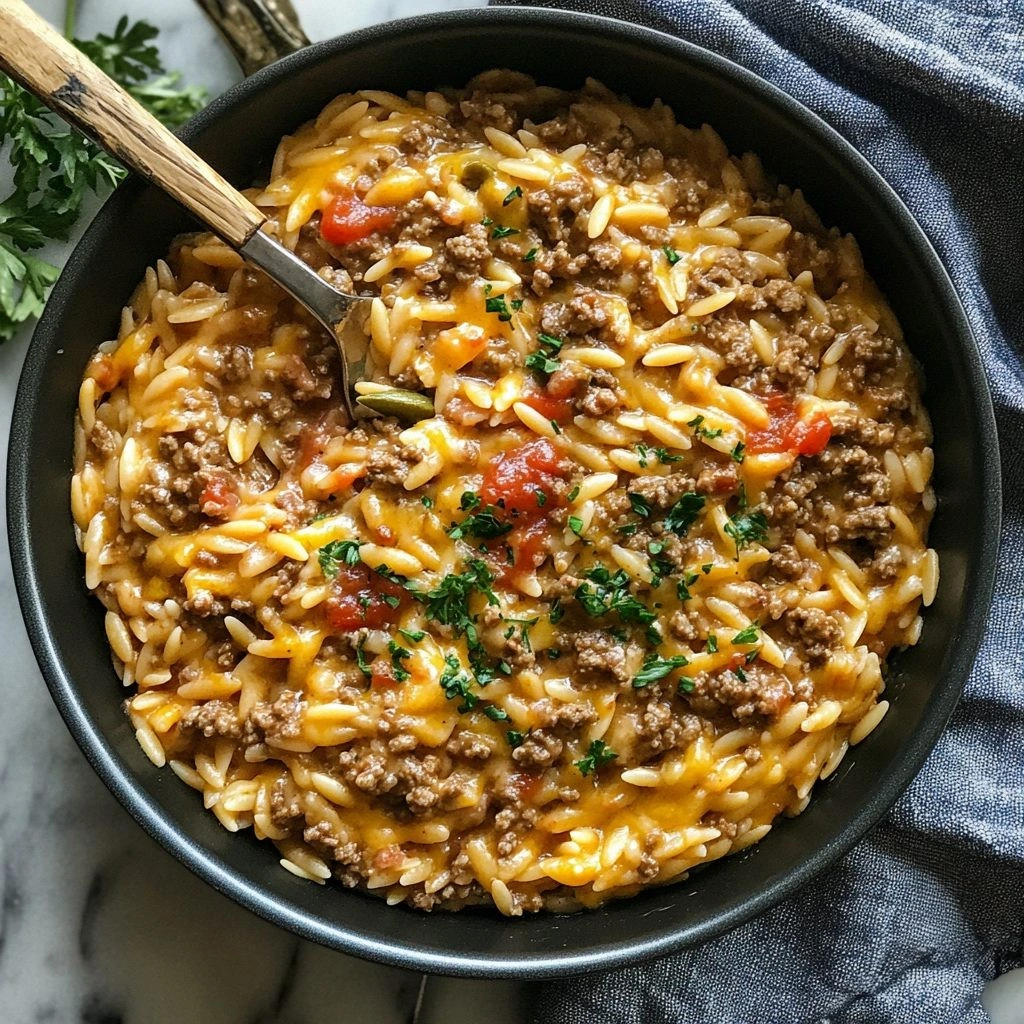
- Cheese Layer: A double-layer of cheddar and mozzarella melts into a silky blanket that coats every grain, giving that irresistible gooeyness you crave after a long day.
- Convenience: All the steps can be done in one pan and finished in the oven, making cleanup a breeze and the cooking time under 45 minutes.
- Versatility: You can swap the meat for turkey, plant-based patty, or even a hearty lentil mixture, turning the dish into a vegetarian or vegan option without losing flavor.
- Make‑Ahead Potential: The dish keeps well in the fridge for up to three days, and can be reheated in the oven or microwave, making it a perfect weeknight dinner.
- Presentation: The bright green of pickles and parsley against the golden cheese creates a dish that looks as good as it tastes.
Inside the Ingredient List
The Flavor Base
Ground Beef: The cornerstone of this dish, it provides a hearty, meaty foundation that carries the sauce’s tang. Choosing an 80/20 blend ensures juiciness without excessive grease, but you can opt for 90/10 for a leaner version. Skipping this step would turn the dish into a bland pasta that lacks depth. If you’re avoiding red meat, a plant-based burger patty works just as well.
Onion: Diced onions release natural sugars when sautéed, adding sweetness that balances the acidity of the tomato sauce. If you prefer a milder flavor, use a red onion for its subtle bite. A pinch of salt helps draw out moisture, preventing sogginess. Skipping onion means you lose the caramelized undertone that makes the sauce sing.
Garlic: Fresh minced garlic infuses the dish with a warm, aromatic punch that lingers on the palate. For a milder taste, use only one clove or replace with garlic powder. Garlic pairs beautifully with beef, enhancing its savory notes. Omit garlic, and the sauce will feel flat and uninspired.
The Sauce Symphony
Tomato Sauce: This forms the liquid base, providing acidity that cuts through the richness. Use a chunky sauce for texture, or a smooth one for a silky finish. If you’re using a low-sugar brand, add a splash of balsamic to brighten the flavor. Without it, the dish would lack cohesion.
Ketchup: Adds natural sweetness and depth, creating a classic burger glaze. Swap for tomato paste for a thicker consistency or use a spicy variant for heat. Ketchup also helps thicken the sauce slightly, giving it a glossy sheen. Removing it would diminish the signature burger vibe.
Mustard: A dash of mustard introduces a subtle sharpness that lifts the sauce’s complexity. A Dijon mustard brings a hint of peppery bite; a yellow mustard offers a milder profile. Mustard also helps emulsify the sauce, making it smoother. Without mustard, the sauce feels one-dimensional.
Worcestershire Sauce: This umami booster gives the sauce depth reminiscent of a well-aged steak. If you’re vegetarian, replace it with soy sauce or a splash of balsamic vinegar. Worcestershire also adds a hint of spice that balances the sweetness. Skipping it would flatten the flavor profile.
The Texture Crew
Orzo Pasta: Small, rice-shaped pasta that absorbs sauce like a sponge, creating a creamy bite. Cook it al dente to maintain a pleasant bite; overcooking leads to mushy texture. If you’re gluten-free, opt for a corn or rice orzo alternative. Without orzo, the dish would become a simple casserole lacking that pasta element.
Cheddar & Mozzarella: The cheddar provides sharpness, while the mozzarella offers stretch and creaminess. Mixing the two yields a balanced cheese profile that coats every grain. If you’re lactose intolerant, try a dairy-free cheese blend; the melt will still be satisfying. Omit the cheese, and you’ll lose the signature gooeyness.
Bacon: Adds smoky crunch that contrasts the softness of the pasta and cheese. Crumble it before adding so it distributes evenly. If you’re avoiding pork, use turkey bacon or skip entirely for a lighter version. Bacon’s saltiness also enhances the overall savory depth.
The Unexpected Star
Pickles: The briny crunch injects a burst of acidity that cuts through the richness, giving the dish a refreshing edge. If you don’t have pickles, diced green onions or a spoonful of relish can work. Pickles also add a pop of color, making the dish visually appealing. Without pickles, the dish feels one-dimensional.
Olive Oil: A splash of olive oil before browning the beef keeps the meat from sticking and adds a subtle fruity note. Use a light olive oil to keep the flavor from overpowering the sauce. If you’re looking for a heart-healthy option, consider avocado oil. Skipping oil can cause the meat to burn or stick.
Butter: A tablespoon of butter at the end enriches the sauce, giving it a silky finish. Substitute with a dairy-free butter alternative if needed. Butter also brightens the overall flavor. If you omit it, the sauce may feel slightly flat.
Smoked Paprika & Oregano: These spices add depth and a subtle smoky undertone that mirrors a grill’s flavor. Use dried oregano for an herbal note; smoked paprika brings a hint of campfire. If you’re sensitive to spice, reduce the amount or omit. Without these, the sauce loses its savory complexity.
Everything's prepped? Good. Let's get into the real action...
The Method — Step by Step
- Brown the Beef: Heat a large skillet over medium-high heat and add the ground beef, breaking it apart with a wooden spoon. Let it sear for 5–7 minutes until fully browned and any liquid has evaporated. This step locks in flavor and creates a caramelized crust. If the pan starts smoking, lower the heat to prevent burning.
- Sauté Onions & Garlic: Add the diced onion to the skillet and cook until translucent, about 3–4 minutes. Stir in the minced garlic and cook for an additional 30 seconds until fragrant. The garlic’s aroma should fill the kitchen, signaling the sauce is building depth. Keep the heat moderate to avoid burning the garlic.
- Build the Sauce: Stir in tomato sauce, ketchup, mustard, Worcestershire sauce, smoked paprika, oregano, salt, and pepper. Bring the mixture to a gentle simmer, allowing the flavors to marry for 5 minutes. The sauce should thicken slightly and develop a glossy sheen. Taste and adjust seasoning if needed.
- Cook the Orzo: While the sauce simmers, bring a pot of salted water to a boil and add the orzo. Cook for 8–10 minutes until al dente, then drain and set aside. The pasta should be firm but tender, ready to soak up the sauce. Avoid overcooking, or the orzo will become mushy.
- Combine Pasta & Sauce: Return the cooked orzo to the skillet and stir to coat each grain. Pour in the beef broth to loosen the sauce slightly, then let it reduce for 2 minutes. The mixture should be silky and cohesive, with the pasta absorbing the liquid. This step ensures a creamy texture that feels like a comforting casserole.
- Melt the Cheeses: Reduce heat to low and stir in shredded cheddar and mozzarella until they melt into a silky blanket. Add crumbled bacon and diced pickles, then stir until the bacon is evenly distributed. The cheese should coat every grain of orzo, creating a luscious coating. If the cheese starts to separate, add a teaspoon of butter to re-emulsify.
- Finish with Butter & Lemon: Stir in a tablespoon of butter for richness and a squeeze of fresh lemon juice for brightness. Add chopped parsley for a pop of color and a fresh herbal note. This final touch elevates the dish from good to unforgettable. Taste and adjust the seasoning if necessary.
- Bake to Perfection: Transfer the mixture to a greased baking dish and top with a handful of shredded mozzarella and a swirl of sour cream if desired. Bake in a preheated oven at 375°F (190°C) for 10–12 minutes until bubbly and golden on top. The cheese should melt into a golden crust that cracks when you lift a spoon. Let it rest for 5 minutes before serving.
That's it — you did it. But hold on, I've got a few more tricks that'll take this to another level...
Insider Tricks for Flawless Results
The Temperature Rule Nobody Follows
Cooking the beef at the right temperature is crucial. Start on high to sear the surface, then lower to medium to finish cooking without drying out. I once tried a single high heat setting and ended up with a dry, rubbery beef that clung to the pan. Keep a thermometer handy; 160°F is the sweet spot for ground beef.
Why Your Nose Knows Best
Smell the sauce as it simmers. A subtle caramelized aroma means the onions and garlic have browned enough to release their sugars. If you notice a burnt smell, reduce the heat immediately. Your nose is a reliable guide to flavor development.
The 5-Minute Rest That Changes Everything
After baking, let the dish rest for five minutes. The residual heat continues to melt the cheese, creating a smoother texture. If you cut into it immediately, you’ll see the cheese pull away in strings, which feels less refined. The rest also allows the flavors to meld.
Use Fresh Herbs, Not Dried
Fresh parsley or cilantro adds brightness that dried herbs can’t match. Sprinkle them on top just before serving to keep their color vibrant. Dried herbs lose potency over time, so fresh is always better for a dish that’s already rich.
Add a Splash of Acid for Balance
A tablespoon of lemon juice or a dash of vinegar brightens the dish and cuts through the richness. I like to add a splash of balsamic for a touch of sweetness. This simple addition can transform the flavor profile from heavy to harmonious.
Creative Twists and Variations
Spicy Jalapeño Kick
Add finely diced jalapeños to the sauce for a fiery punch. The heat balances the sweetness of the ketchup, creating a layered flavor. Great for those who love a spicy bite. Serve with a side of cool sour cream to temper the heat.
Mediterranean Twist
Swap the beef for lamb and use feta cheese instead of cheddar. Add diced olives and sun-dried tomatoes for a Mediterranean flair. The oregano becomes the star, and the dish feels like a hearty Greek pasta. Perfect for a themed dinner night.
Vegetarian Burger Orzo
Use a plant-based burger patty or cooked lentils in place of beef. Keep the bacon optional or replace with crispy tofu. The sauce remains the same, delivering a familiar burger flavor in a vegan format. This version is surprisingly filling.
Cheesy Cauliflower Orzo
Roast cauliflower florets until golden and toss them with the orzo. The cauliflower adds a subtle nuttiness and extra nutrients. Pair with a sprinkle of parmesan for an extra cheesy layer. A great low-carb alternative.
Breakfast Burger Orzo
Serve the dish with a side of scrambled eggs and a drizzle of hot sauce. The eggs add protein and a velvety texture that complements the cheesy orzo. This breakfast twist turns the dish into a hearty brunch option. Pair with fresh fruit for balance.
Gourmet Truffle Finish
Finish with a drizzle of truffle oil and a sprinkle of truffle salt. The earthy aroma elevates the dish to a restaurant-quality experience. Use sparingly, as truffle oil is potent. This variation is perfect for special occasions.
Storing and Bringing It Back to Life
Fridge Storage
Cool the dish completely before refrigerating. Store in an airtight container for up to three days. The cheese remains creamy, and the sauce retains its richness. When reheating, add a splash of water to keep it moist.
Freezer Friendly
Pack the dish in a freezer-safe container and label with the date. Freeze for up to two months. Thaw overnight in the fridge before reheating. The texture stays intact, and the flavors develop even more depth.
Best Reheating Method
Reheat in a preheated oven at 350°F (175°C) for 15–20 minutes. If you prefer a quick microwave, use a microwave-safe dish and add a tablespoon of water to keep the sauce from drying. Cover loosely to trap steam. The dish will be piping hot and as delicious as fresh.