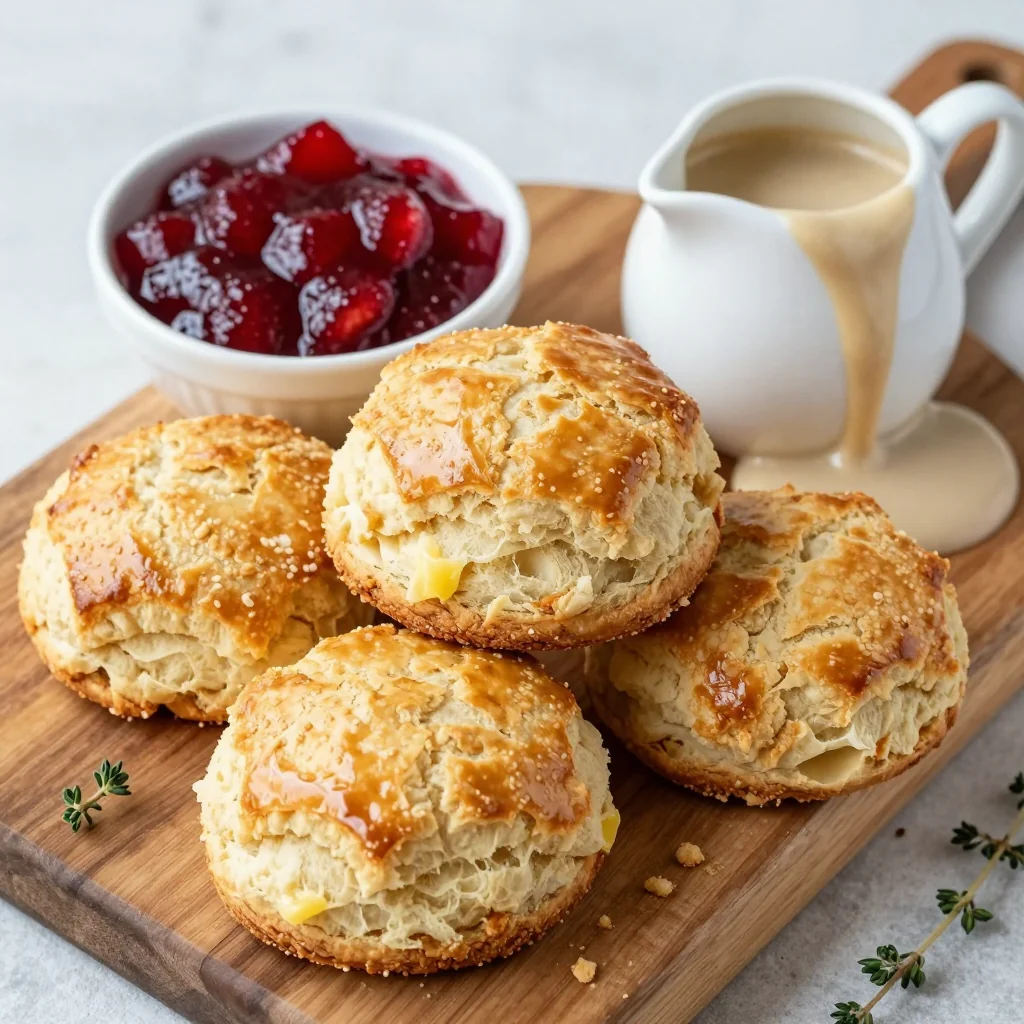
Love this? Pin it for later! 📌
Why This Recipe Works
- Ice-cold buttermilk: The acidity tenderizes gluten while the chill keeps flecks of butter solid—those flecks melt into steam pockets for lift.
- Laminated layers: A quick letter-fold multiplies flaky strata without croissant-level effort.
- High-ratio butter: 50 % of the fat content is butter for flavor; the rest is shortening for tenderness.
- Sharp cutter: A metal biscuit cutter (or floured knife) slices cleanly; twisting seals edges and inhibits rise.
- Touch-and-go handling: Minimal kneading prevents gluten development that toughens crumbs.
- Close-pack bake: Biscuits shoulder-to-shoulder on the sheet climb upward, not outward, for sky-high sides.
Ingredients You'll Need
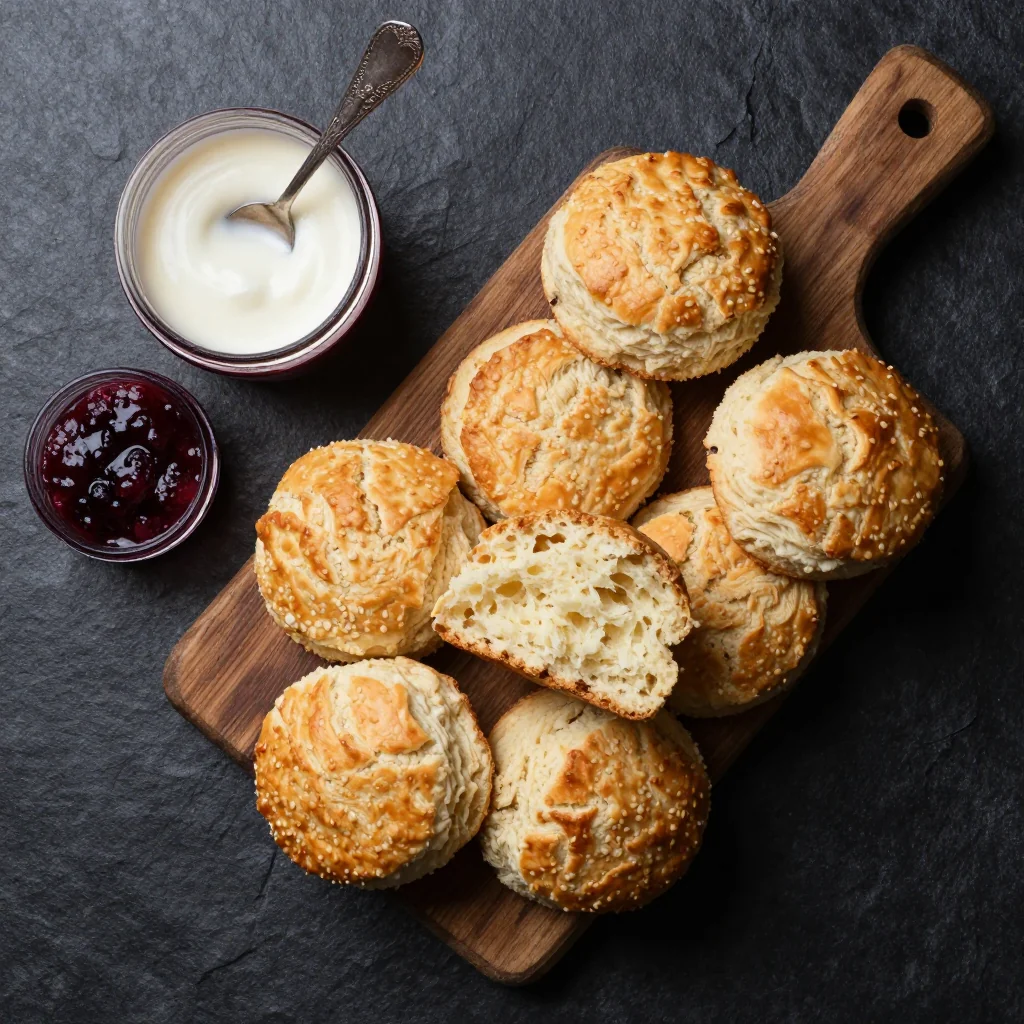
Great biscuits start with grocery-store sleuthing. Look for low-protein all-purpose flour (Southern brands hover around 8–9 % protein) to limit gluten. If you only have national brands, replace 2 Tbsp per cup with cornstarch to mimic soft wheat. Your buttermilk should be thick enough to coat the bottle—shake it first; if it sloshes like milk, stir 1 Tbsp white vinegar into 235 ml (1 cup) whole milk and rest 10 min. For butter, I splurge on European-style (82 % fat) because the extra fat hydrates flour and carries flavor. Shortening tempers browning so the tops don’t over-darken before the centers bake through. Finally, keep a box of baking powder younger than six months; stale leavener is the silent culprit behind flat, sad biscuits.
How to Make Fluffy Buttermilk Biscuits to Serve with Jam or Gravy
Chill everything
Place measured butter and shortening in the freezer for 15 min. Stick your mixing bowl, pastry blender, and even the flour in the fridge if kitchen is above 23 °C (74 °F). Cold ingredients are non-negotiable for lamination.
Whisk dry base
In a large chilled bowl, whisk 3 cups (375 g) soft-wheat flour, 1 Tbsp baking powder, 1 tsp fine sea salt, and ¼ tsp baking soda. Aerating now reduces later stirring, which keeps dough tender.
Cut in fats
Add 6 Tbsp (85 g) frozen unsalted butter cubes and 4 Tbsp (55 g) frozen shortening. Using a pastry blender, snap the fats until pea-size bits remain—some flakes the size of oatflakes are welcome for layering.
Make the well
Form a crater in the flour mixture; pour 1 cup (240 ml) ice-cold buttermilk all at once. With a silicone spatula, fold from edge to center, scraping bowl sides. Dough will look shaggy and slightly dry—resist adding liquid.
Letter fold
Turn clumps onto a floured parchment. Pat into a 2 cm-thick rectangle. Fold right third over center, left third over that—like a business letter. Rotate 90°, re-pat, and fold once more. This builds layers without overworking.
Cut, don’t twist
Pat dough final thickness of ¾ in (2 cm). Dip a 2½-in cutter in flour; press straight down. Lift cutter, don’t twist. Re-pat scraps once—more handling equals tough biscuits. Arrange biscuits on a parchment-lined sheet so edges kiss.
Chill & preheat
Freeze pan 10 min while heating oven to 220 °C (425 °F). Cold rest relaxes gluten and re-chills fats so biscuits spring up fast before butter melts and spreads.
Brush & bake
Melt 1 Tbsp butter; brush tops only—avoiding sides lets edges grip each other and rise higher. Bake 14–16 min until crowns are chestnut-gold. Rotate sheet halfway for even browning.
Butter bath finish
While hot, brush again with remaining melted butter mixed with a pinch of flaky salt. Cool 5 min on pan, then transfer to a tea towel–lined basket to preserve bottoms’ crispness.
Serve with intention
Split horizontally with a serrated knife; spread cultured butter and peach-vanilla jam for sweet, or ladle cayenne-speckled sausage gravy for savory. Leftovers reheat at 175 °C (350 °F) for 6 min.
Expert Tips
Freeze your tools
Metal conducts heat away fast. Slip your pastry cutter and mixing bowl into the freezer 15 min before starting for insurance-grade cold.
Weigh for accuracy
A cup of flour can vary by 20 g. Using a scale guarantees the hydration ratio stays constant, eliminating guesswork on buttermilk adjustments.
Don’t overproof
Biscuits rely on chemical leaveners, not yeast. Once wet and dry meet, get them into the oven quickly to capture the first CO₂ burst.
Reuse scraps smartly
Stack trimmings, press, fold once, then cut. A second gathering still yields lofty biscuits; a third risks hockey pucks—bake trimmings as cook’s treat.
Steam, not sweat
A cast-iron skillet retains heat and radiates upward, cooking bottoms faster. Add 2 tsp water to the hot pan just before baking for extra steam lift.
Overnight option
Cut biscuits, freeze on sheet, then bag. Bake from frozen, adding 3 min. You’ll have fresh biscuits before the coffee finishes dripping.
Variations to Try
- White-cheddar-chive: Fold 1 cup grated sharp white cheddar and 2 Tbsp minced chives into dry mix. Sprinkle extra cheese on tops before baking.
- Black-pepper-maple: Add 1 tsp cracked pepper to flour; brush baked biscuits with maple-butter glaze (maple syrup + butter 1:1).
- Gluten-free: Substitute 2 cups Cup-4-Cup blend + ½ cup almond flour; increase buttermilk by 2 Tbsp for moisture.
- Sweet potato: Swap ⅓ cup buttermilk for ⅓ cup chilled mashed sweet potato; reduce baking powder to 2 tsp, add 1 tsp cinnamon.
- Herb-oil vegan: Replace dairy with coconut cream + 1 Tbsp lemon juice; use olive oil–based vegan butter. Brush with garlic-herb oil post-bake.
Storage Tips
Room temp: Cool completely, then store in a linen-lined airtight container up to 24 h. Linen wicks moisture so tops don’t get gummy.
Refrigerate: Not recommended—cold starch retrogrades, making biscuits crumbly. If you must, wrap individually in plastic, reheat wrapped in foil at 160 °C (325 °F) 8 min.
Freeze baked: Flash-freeze on tray, then bag with parchment between layers. Reheat from frozen at 175 °C (350 °F) 10 min, brushing with butter to refresh.
Freeze unbaked: Best quality. Cut, freeze solid, transfer to freezer bag up to 2 months. Bake from frozen 18 min at 220 °C (425 °F).
Frequently Asked Questions
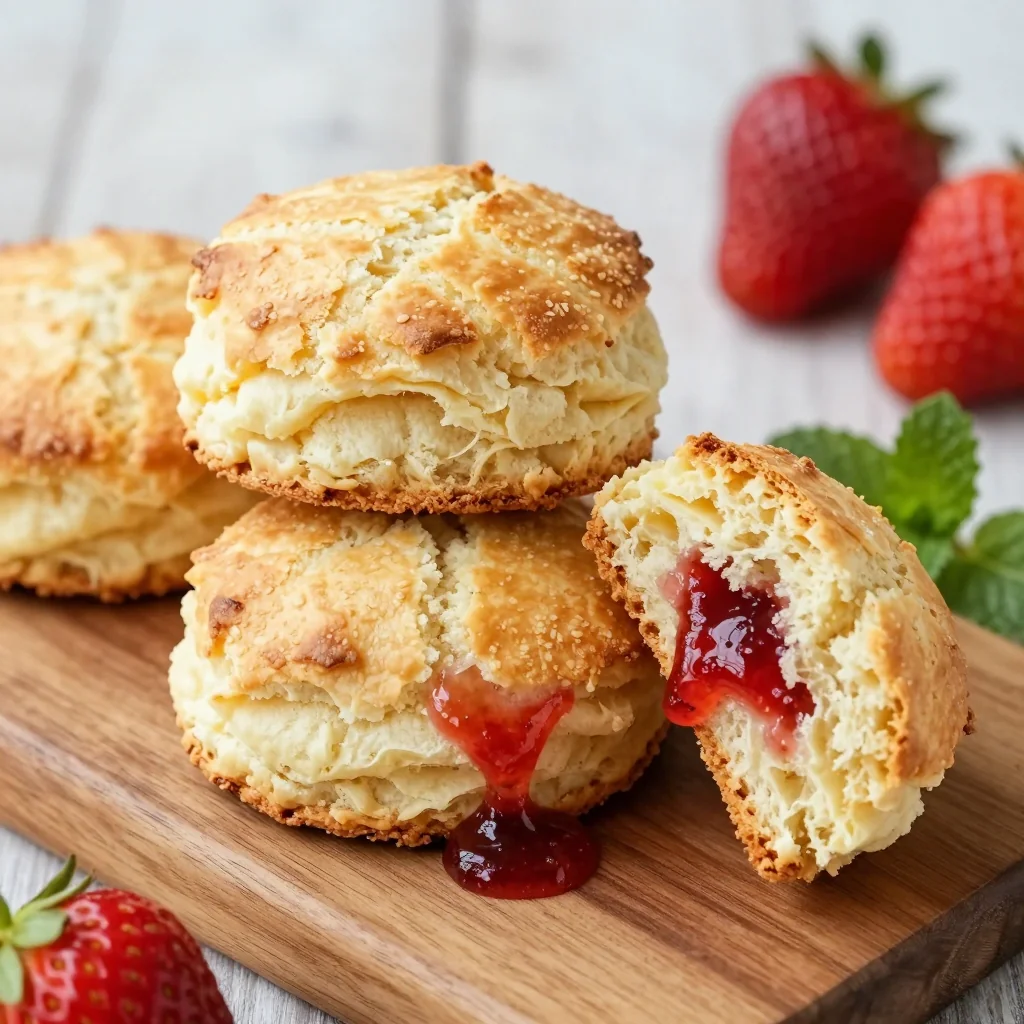
Fluffy Buttermilk Biscuits to Serve with Jam or Gravy
Ingredients
Instructions
- Chill ingredients: Freeze fats 15 min. Keep buttermilk in fridge until needed.
- Mix dry: Whisk flour, baking powder, salt, and soda in a chilled bowl.
- Cut in fats: Add frozen butter & shortening; cut to pea-size bits.
- Add buttermilk: Make a well, pour buttermilk, fold just until shaggy.
- Laminate: Pat, letter-fold twice for flaky layers.
- Cut & chill: Cut with floured cutter, place touching on sheet, freeze 10 min.
- Bake: 220 °C (425 °F) for 14–16 min until golden. Brush with melted butter and flaky salt. Cool 5 min before serving.
Recipe Notes
For mile-high rise, bake biscuits shoulder-to-shoulder in a cast-iron skillet. If your kitchen is warm, refrigerate dough between steps.