Love this? Pin it for later! 📌
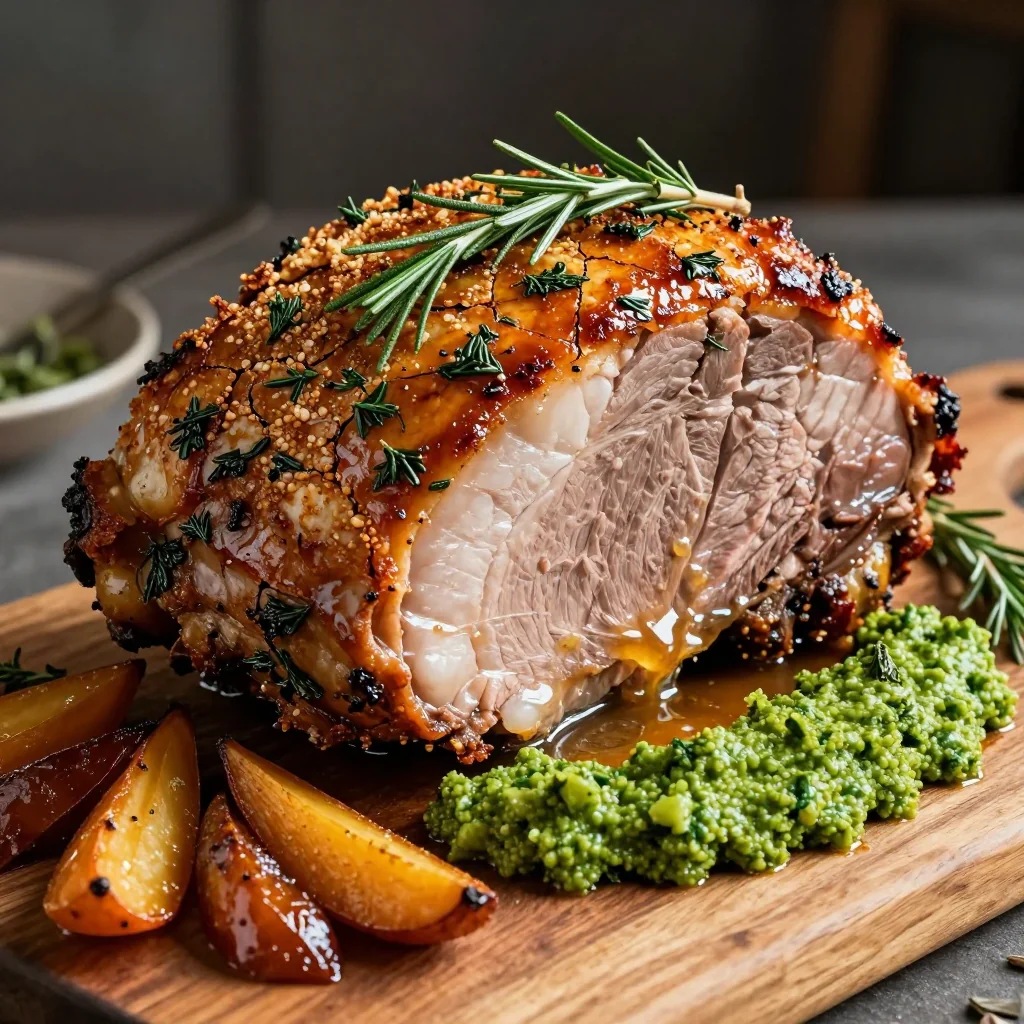
There’s something magical about the first meal of the year. It sets the tone for the months ahead, and in our house, that means a magnificent pork roast—golden-crackling outside, rose-juicy inside, perfumed with winter herbs and citrus. My grandmother started this tradition; she believed pork’s forward-moving “rooting” symbolized progress and prosperity. I just love how the aroma drifts through every room while we sip mimosas and write resolutions on the backs of old Christmas cards.
I’ve refined her recipe over fifteen New Year’s mornings. The secret isn’t just the herb paste (though we’ll make a knockout one); it’s a cold-start oven, a digital probe that beeps like midnight fireworks, and a resting ritual that lets the juices march back to the center. Whether you’re feeding a crowd in sequins and slippers or a quiet trio in pajamas, this roast feels like confetti in edible form—dramatic enough for Instagram, comforting enough to eat in a blanket fort.
Below you’ll find every step I teach at my winter cooking classes, plus make-ahead tricks so you can dance into January 1 without stress. Let’s turn that hunk of pork into the juiciest showstopper your table has ever met.
Why This Recipe Works
- Cold-start oven: Gently renders fat for shatter-crisp crackling without drying the loin.
- Herb-citrus paste: Fresh rosemary, thyme, sage, and orange zest penetrate deep when scored and marinated overnight.
- Probe thermometer: Removes guesswork; roast stops the moment it hits 145°F (63°C).
- Reverse-sear finish: A final 500°F blast bubbles the rind into pork-candy perfection.
- Make-ahead friendly: Score, season, and truss up to 48 hrs early; just slide into oven morning-of.
- Pan-sauce bonus: Caramelized apple cider and Dijon whisked into drippings for a glossy gravy.
Ingredients You'll Need
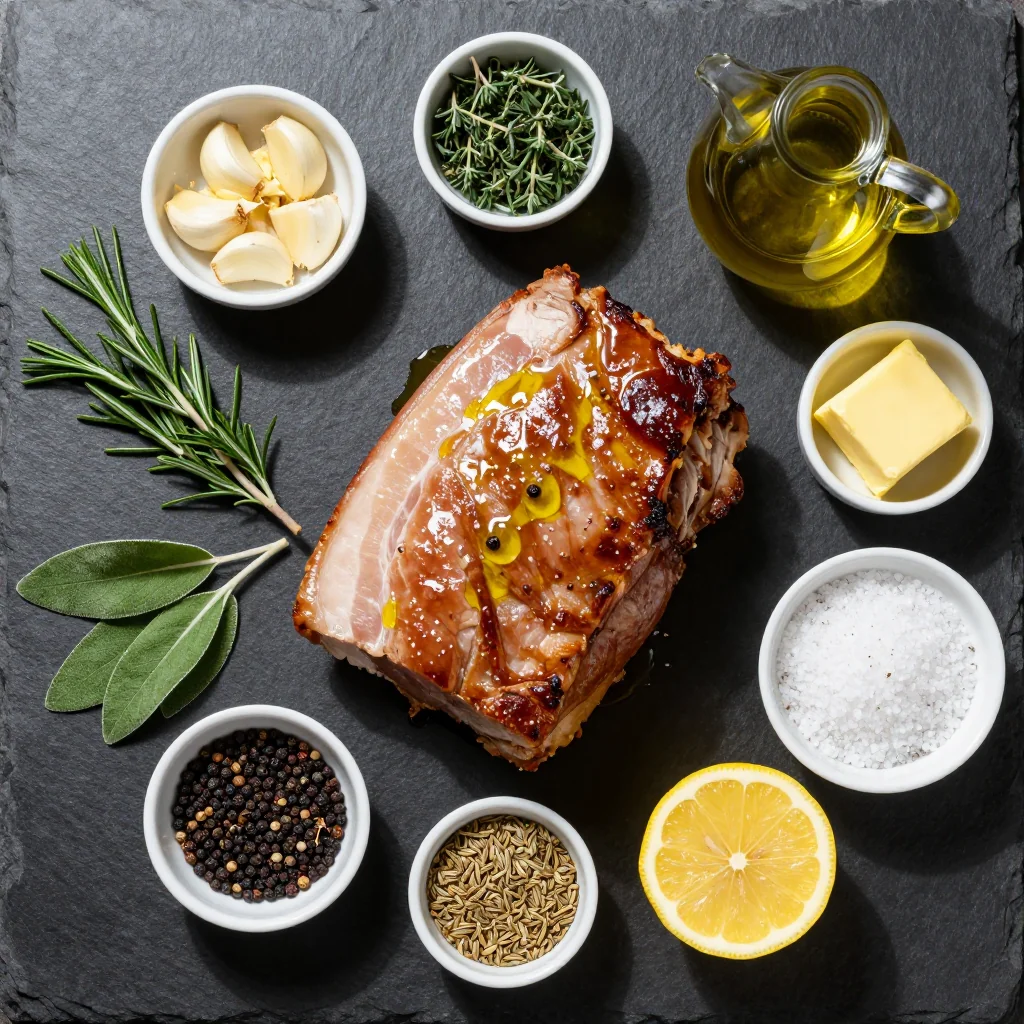
Choose a boneless pork rib roast (often labeled “center-cut loin roast”) between 4 and 6 lb. Look for creamy white fat caps at least ¼-inch thick; they’ll baste the meat as it cooks. If you spot a bluish tint or dried edges, move on. Ask the butcher to french the bones for presentation, or simply score them yourself.
Herbs: Fresh rosemary, thyme, and sage are non-negotiable. Their wintery pine and eucalyptus notes sing against pork’s richness. Strip leaves just before blending; dried herbs turn dusty under long heat.
Citrus: One large navel orange perfumes the paste; a lemon half slipped into the cavity brightens the interior. Zest first, then juice the orange for the pan sauce.
Garlic: Six plump cloves, smashed and peeled. Green shoots mean bitter bite; discard those.
Fat: Two tablespoons of good olive oil carry flavors, plus one tablespoon of softened butter for browning insurance.
Salt: Coarse kosher salt draws moisture from the rind, setting up crackling bubbles. We’ll use flaky salt at the table for crunch.
Sweet: A modest tablespoon of brown sugar balances salt and encourages caramelization without tasting dessert-like.
Liquid for sauce: 1 cup unfiltered apple cider and ½ cup low-sodium chicken stock reduce into a silky glaze. A splash of Calvados is celebratory but optional.
How to Make New Year's Day Pork Roast with Herbs for a Juicy Showstopper
Pat roast dry with paper towels. Using a sharp, thin knife (a boning knife works), score fat in 1-inch crosshatch cuts, slicing just to the flesh—no deeper, or juices leak. Place on a wire rack set inside a rimmed sheet pan, uncovered, and refrigerate 24–48 hrs. The surface will desiccate, which equals maximal crackling.
In a mini-processor, blitz 2 Tbsp rosemary leaves, 2 Tbsp thyme leaves, 6 sage leaves, zest of 1 orange, 6 garlic cloves, 2 tsp coarse salt, 1 Tbsp brown sugar, 2 Tbsp olive oil, and 1 Tbsp softened butter until a damp paste forms. No processor? Mince herbs finely, then mash with a mortar and pestle.
Rub paste over every crevice, sliding it into score marks. If your roast is trussed, loosen strings slightly so seasoning sneaks underneath. Return to rack, cover loosely with parchment (not plastic), and refrigerate 12–24 hrs. The salt penetrates, seasoning from within.
Remove roast 2 hrs before cooking to temper. Retruss tightly with kitchen twine every 1½ inches so it cooks evenly. Insert probe thermometer dead-center through the side, avoiding fat pockets. Note: cold-start cooking means you’ll place pork in oven before it heats.
Set pan on lowest shelf. Turn oven to 250°F (120°C). Roast 3½–4 hrs (about 25 min per lb) until probe reads 140°F (60°C). Fat renders slowly, basting meat; interior stays rosy. Meanwhile, mingle with guests—no basting needed.
Increase oven to 500°F (260°C). Remove parchment if used. Roast 10–15 min more, rotating pan halfway, until rind puffs and crackles. Internal temp should now hit 145°F (63°C). Remove promptly; overcooking at this stage dries edges.
Transfer roast to carving board, tent loosely with foil, rest 30 min. Meanwhile, pour pan juices into fat separator; reserve 2 Tbsp fat and all the golden jus. Resting allows juices to reabsorb, producing cleaner slices.
Place roasting pan on stovetop over 2 burners medium. Add reserved fat, 1 cup cider, ½ cup stock, and 2 tsp Dijon. Simmer, scraping fond, until reduced by half, 5 min. Whisk in 1 Tbsp butter, season with salt, pepper, and a squeeze of orange.
Remove strings. Slice between ribs for bone-in chops, or carve along bone for restaurant-style medallions. Arrange on platter, drizzle with pan sauce, shower with fresh herbs and orange zest. Serve with champagne and collard greens for luck.
Expert Tips
Tip 1: Dry Equals Crisp
A 48-hour uncovered chill is crackling insurance. The skin desiccates, so bubbles form instead of rubbery patches.
Tip 2: Probe Placement
Insert from side into thickest muscle, away from fat seams. Fat heats faster and gives false highs.
Tip 3: No Basting
Opening the oven drops temp and softens crackling. Trust the low, steady heat.
Tip 4: Resting Time
Give it 30 min. Juice loss doubles if carved sooner; texture becomes cottony when held longer than 45 min.
Tip 5: Flavor Under Skin
Slide fingers between fat and meat to create pockets; smear paste inside for hidden flavor bombs.
Tip 6: Crisp After Carve
If rind softens while resting, flash slices under broiler 60 sec per side—works like a charm.
Variations to Try
- Smoky Paprika & Coffee: Swap orange zest for 1 Tbsp espresso powder and 1 tsp smoked paprika in paste. Serve with bourbon-spiked sauce.
- Asian Five-Spice: Sub 1 Tbsp five-spice for herbs, use miso instead of butter, and glaze with hoisin during last 5 min.
- Apple-Wood Smoked: After cold roast, transfer to smoker at 225°F with apple wood for 2 hrs, then reverse-sear in oven.
- Stuffed Porcini: Slice 2-inch pocket in center, fill with rehydrated porcini, breadcrumbs, and parmesan; truss and roast as directed.
- Maple-Mustard Glaze: Brush 3 Tbsp maple syrup + 1 Tbsp wholegrain mustard during last 15 min for sticky sweetness.
Storage Tips
Make-Ahead: Score, season, and refrigerate up to 48 hrs. Wrap loosely; skin must stay dry. Add citrus zest to paste just before roasting to prevent bitterness.
Leftovers: Cool completely, refrigerate in airtight container 4 days. For best texture, reheat slices in skillet with a splash of cider, covered, 5 min over medium. Microwave toughens crackling.
Freezer: Wrap sliced meat (no rind) in parchment, then foil; freeze 2 months. Thaw overnight in fridge, then reheat as above. Crackling does not freeze well; enjoy fresh.
Pan Sauce: Keeps 5 days refrigerated; reheat gently and whisk in a knob of butter to re-emulsify.
Frequently Asked Questions
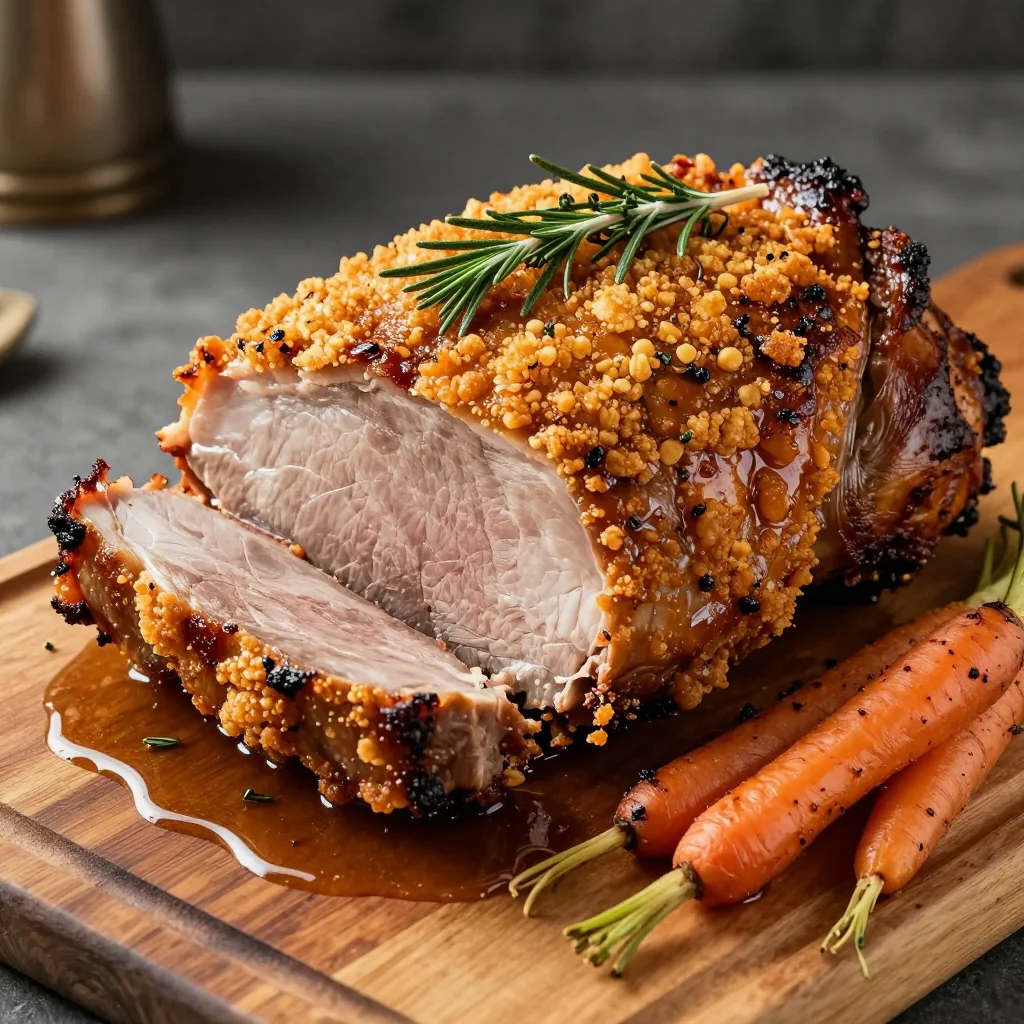
New Year's Day Pork Roast with Herbs for a Juicy Showstopper
Ingredients
Instructions
- Prep Roast: Score fat in 1-inch crosshatch, pat dry, refrigerate uncovered 24–48 hrs.
- Make Paste: Blitz herbs, zest, garlic, salt, sugar, oil, and butter until paste forms.
- Season: Rub paste over roast and into cuts; refrigerate marinated roast 12–24 hrs.
- Truss & Probe: Tie with twine every 1½ inches; insert probe thermometer.
- Cold-Start Roast: Place in cold oven, set to 250°F, cook 3½–4 hrs to 140°F internal.
- Reverse Sear: Raise oven to 500°F, roast 10–15 min until crackling puffs and 145°F.
- Rest: Tent loosely with foil 30 min.
- Pan Sauce: Simmer cider, stock, and mustard in pan 5 min; whisk in butter.
- Carve: Remove strings, slice, drizzle with sauce, garnish with fresh herbs.
Recipe Notes
For ultimate crackling, dry skin 48 hrs. Leftover pork makes killer banh mi or Cuban sandwiches the next day.