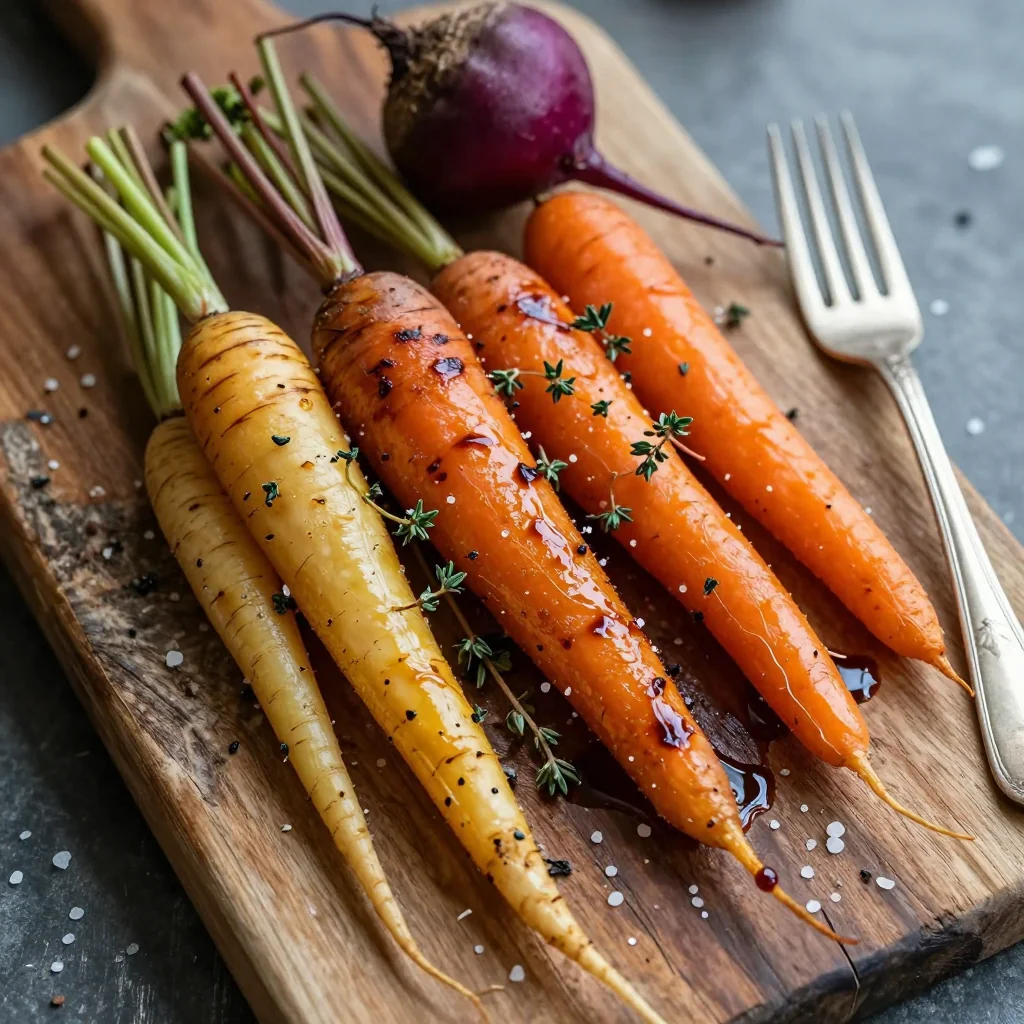
Love this? Pin it for later! 📌
Transform humble winter produce into a show-stopping centerpiece that will have even the turkey playing second fiddle. This caramelized medley of earthy roots, kissed with fragrant thyme and a glossy balsamic glaze, has graced my holiday table for twelve years running—and not once have I packed away the serving dish without at least three guests begging for the recipe.
I still remember the first Christmas I served these vegetables. My mother-in-law, a self-proclaimed Brussels-sprouts skeptic, asked for seconds. My nephew, then eight, declared the sweet-potato cubes “better than candy.” And my husband? He quietly scraped the last sticky, thyme-flecked bits straight from the pan, shrugging when I caught him red-handed. Since then, this dish has become our edible tradition: the colors of autumn and winter—burnt orange, deep garnet, sunset gold—nestled together on a platter like edible jewels. Whether you’re hosting a crowd of twenty or setting a modest table for four, the recipe scales gracefully, fills the house with the aroma of rosemary and balsamic caramel, and leaves you free to fuss over the gravy while the oven does the real work.
Why This Recipe Works
- One-Pan Wonder: Toss, roast, serve—minimal dishes, maximum flavor.
- Natural Sweetness: High-heat roasting concentrates sugars so no added honey or maple is needed.
- Make-Ahead Friendly: Roast early, reheat at 350 °F for 10 minutes—tastes fresh from the oven.
- Dietary Inclusive: Vegan, gluten-free, nut-free—everyone around the table can enjoy.
- Flavor Layers: Woody thyme, peppery olive oil, tangy balsamic build complexity without clutter.
- Color Pop: The jewel-tone array looks festive on a white platter—no garnish required.
Ingredients You'll Need
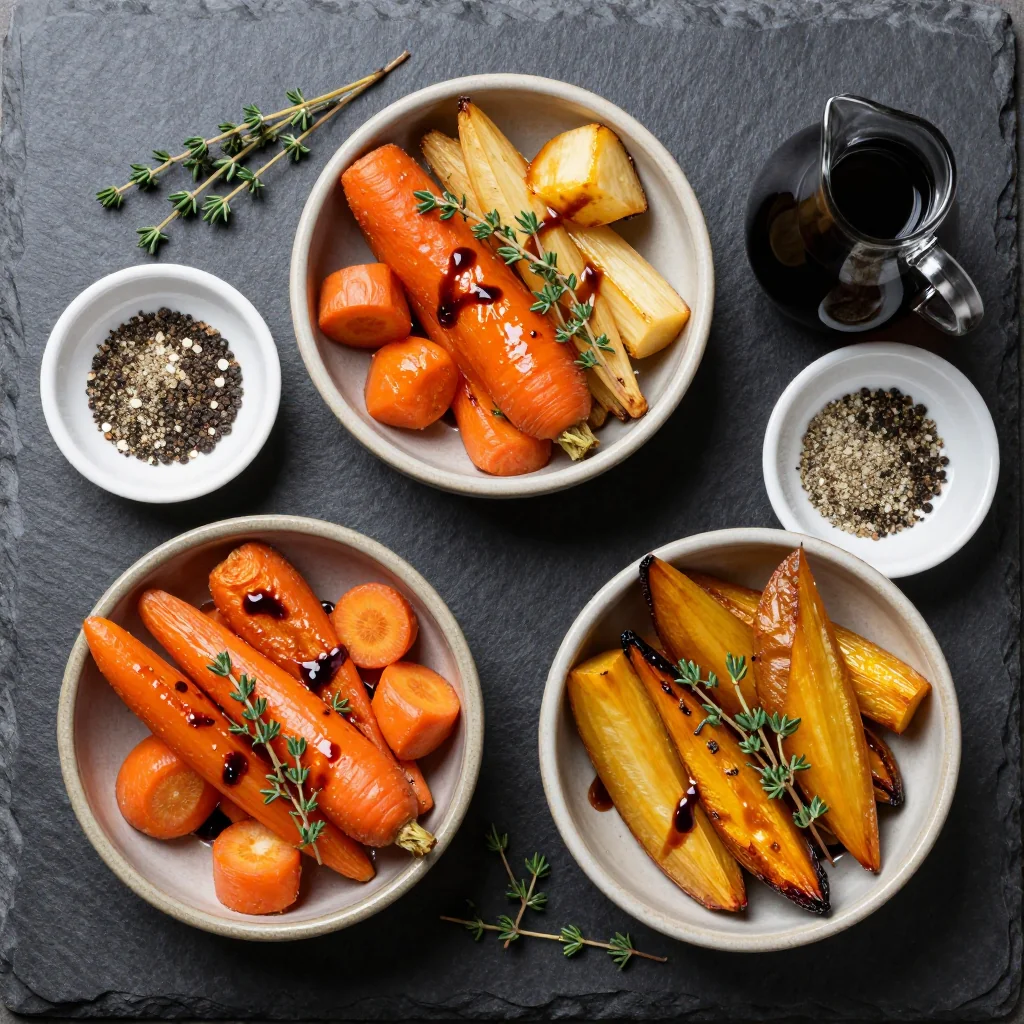
Choose vegetables that feel rock-hard and smell faintly of soil—signs they’ve been stored properly and still hold plenty of natural moisture.
- Sweet Potatoes (2 lb / 900 g): Look for firm, unblemished skins. The orange-fleshed variety roasts into candy-like cubes; Japanese purple sweet potatoes add drama if you can find them.
- Carrots (1 lb / 450 g): Buy bunches with tops still attached; they stay crisp longer. Peel only if the skins are thick—otherwise a good scrub retains nutrients.
- Parsnips (1 lb / 450 g): Choose small to medium roots; larger ones have woody cores. Their subtle nutty sweetness balances the earthier roots.
- Red Beets (1 lb / 450 g): Golden beets bleed less but red ones give the dish a festive ruby pop. Wrap in foil if you want to keep color from running, or embrace the tie-dye effect.
- Red Onion (1 large): Its natural sugars melt into jammy wedges. Soaking cut onions in ice water for 10 minutes tames their bite.
- Fresh Thyme (4–5 sprigs): Woody herbs survive high heat better than soft-leaf basil or parsley. Strip leaves if you dislike stems, but whole sprigs roast beautifully and are easy to remove later.
- Extra-Virgin Olive Oil (¼ cup / 60 ml): A peppery, green oil stands up to robust vegetables. If you prefer neutral, use avocado oil.
- Good Balsamic Vinegar (3 Tbsp): Look for “aged” or “IGP” on the label; thin salad-grade balsamic will scorch. In a pinch, reduce cheaper vinegar by half on the stove for 5 minutes.
- Kosher Salt & Fresh Black Pepper: Salt draws moisture, promoting caramelization; pepper adds gentle heat.
- Optional Finishes: Toasted pecans for crunch, dried cranberries for tart pockets, or a snowy grate of vegan or dairy parmesan.
How to Make Roasted Root Vegetables with Thyme and Balsamic for Holiday Suppers
Preheat & Prep Pans
Position two racks in the upper-middle and lower-middle of your oven and preheat to 425 °F (220 °C). Line two rimmed baking sheets with parchment for easy release, or use well-seasoned cast iron for deeper browning. Do not crowd the pans—overlapping vegetables steam rather than roast.
Cube Uniformly
Peel vegetables as needed, then cut into ¾-inch (2 cm) pieces. Consistency matters: equal surface area equals even cooking. Keep beet pieces slightly larger since they soften faster. Place each type in its own bowl to prevent color bleeding until you’re ready to season.
Season in Stages
Transfer all vegetables to a large mixing bowl. Drizzle with olive oil first, tossing until every piece glistens; the fat helps salt and herbs adhere. Sprinkle 1 ½ tsp kosher salt, ½ tsp freshly cracked black pepper, and thyme leaves. Toss again. Finally, add balsamic vinegar and give one gentle fold—too much stirring after vinegar can start to pickle the vegetables and mute colors.
Arrange for Airflow
Spread vegetables in a single layer, cut-side down where possible. Leave ¼-inch gaps so steam escapes; those gaps are the secret to crispy edges. If doubling for a crowd, use three pans rather than piling higher.
Roast & Rotate
Slide pans onto separate racks and roast 20 minutes. Swap pans top-to-bottom, rotate front-to-back for even browning, and roast another 15–20 minutes. Vegetables are ready when edges are deep mahogany and a fork slides through the thickest piece with gentle resistance.
Glaze & Finish
Drizzle an additional tablespoon of balsamic over the hot vegetables—the heat will thicken it into a glossy lacquer. Taste a cube; add a pinch more salt if needed. Serve warm or room temperature on a platter scattered with fresh thyme leaves for color contrast.
Expert Tips
High Heat = Caramelization
Resist the urge to drop the temperature. 425 °F is the sweet spot where Maillard browning occurs quickly, locking in a creamy interior.
Dry = Crisp
Pat vegetables dry after washing; excess water creates steam. If you’re prepping ahead, refrigerate cut veggies uncovered for up to 24 hours.
Stagger Dense Veg
If you like parsnips extra soft, add them to the pan 10 minutes before other vegetables to give them a head start.
Embrace Color Bleed
Beets will tint neighboring vegetables a festive magenta—lean into the watercolor effect rather than fighting it.
Overnight Flavor Boost
Toss vegetables with oil, thyme, and salt the night before; cover and refrigerate. The salt acts as a dry brine, seasoning throughout.
Sheet-Pan Grains
Scatter ½ cup farro or buckwheat on an empty corner of the pan; they’ll toast in the oil and add crunchy texture to the final dish.
Variations to Try
-
Maple-Bourbon Twist
Swap balsamic for 2 Tbsp maple syrup plus 1 Tbsp bourbon. Add chopped pecans during the last 5 minutes of roasting.
-
Moroccan Spice
Add 1 tsp ground cumin, ½ tsp cinnamon, and a pinch of cayenne. Finish with chopped dried apricots and roasted almonds.
-
Citrus-Herb Bright
Replace balsamic with the juice and zest of 1 orange; swap thyme for rosemary and fold in baby kale leaves for the final 2 minutes.
-
Feta & Pomegranate
Cool vegetables to room temp, then sprinkle with crumbled feta and pomegranate arils for a sweet-salty pop.
Storage Tips
Refrigerate: Cool completely, then transfer to an airtight container. They’ll keep up to 5 days, though colors may mute after day 3.
Freeze: Spread cooled vegetables in a single layer on a parchment-lined sheet; freeze until solid, then tip into freezer bags. Best used within 2 months; thaw overnight in the fridge and reheat at 400 °F for 10 minutes to restore crisp edges.
Make-Ahead for Holidays: Roast up to 48 hours early. Refrigerate on the sheet pan, wrapped tightly. Reheat uncovered at 375 °F for 12–15 minutes, adding final balsamic glaze just before serving.
Frequently Asked Questions
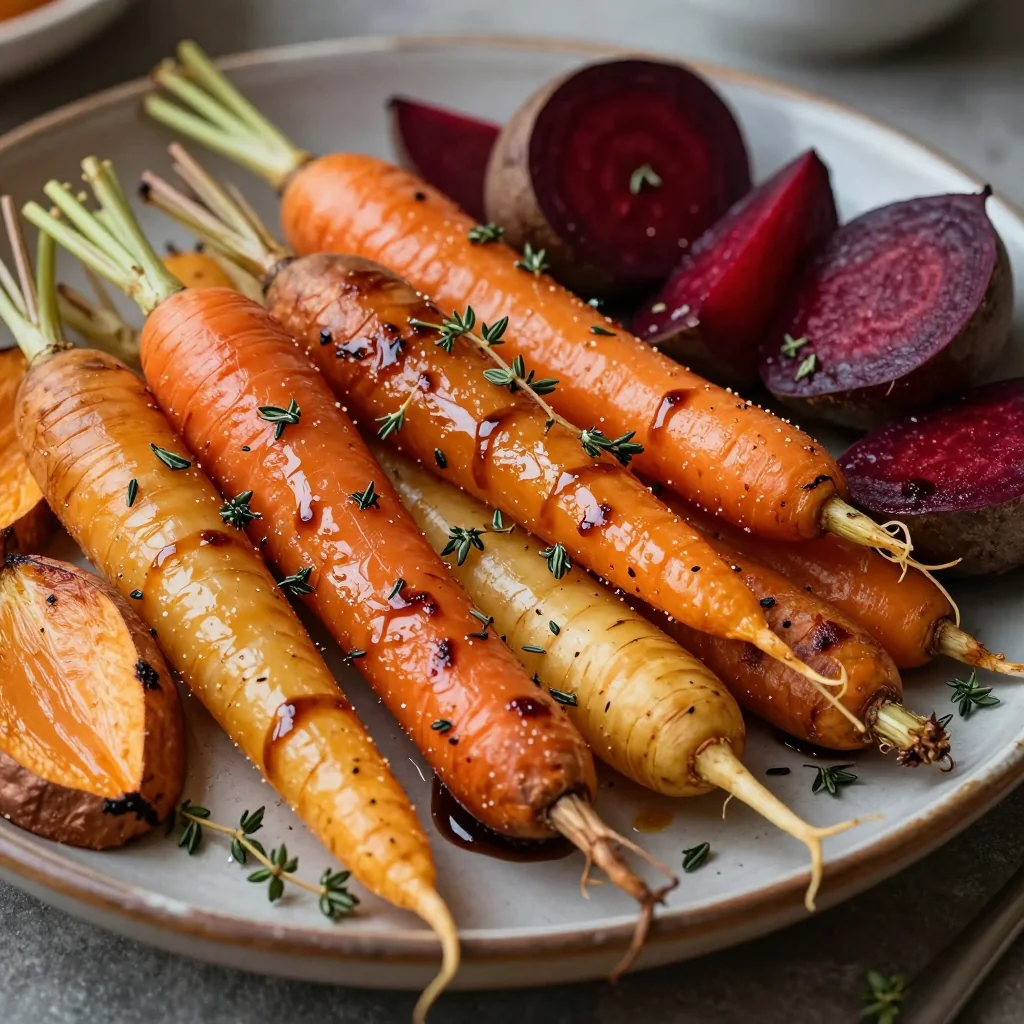
Roasted Root Vegetables with Thyme and Balsamic for Holiday Suppers
Ingredients
Instructions
- Preheat: Heat oven to 425 °F (220 °C). Line two rimmed baking sheets with parchment.
- Season: In a large bowl, combine all vegetables with olive oil, salt, pepper, and thyme until evenly coated. Drizzle 2 Tbsp balsamic and toss gently.
- Arrange: Spread vegetables in a single layer on prepared pans; keep beet pieces slightly separated to prevent bleeding if desired.
- Roast: Roast 20 min, swap pans and rotate, then roast 15–20 min more until edges are caramelized and centers tender.
- Glaze: Drizzle remaining 1 Tbsp balsamic over hot vegetables. Taste and adjust salt.
- Serve: Transfer to a platter, scatter optional toppings, and serve warm or room temperature.
Recipe Notes
For a make-ahead holiday schedule, roast up to 48 hours early, refrigerate, and reheat uncovered at 375 °F for 12 minutes. Final balsamic keeps colors vivid.