Love this? Pin it for later! 📌
I first developed this recipe during a particularly brutal January when snowstorms kept us housebound for days. My pantry held little more than a can of pumpkin purée, some heavy cream, and the usual aromatics. What emerged from that scarcity became my most-requested winter recipe. The secret lies in treating humble ingredients with respect: slowly caramelizing the onions until they're jammy, blooming the spices in butter until the kitchen smells like a Moroccan souk, and finishing with just enough cream to enrich without overwhelming the pumpkin's earthy sweetness.
Unlike many pumpkin soups that lean heavily on sweetness, this version walks the line between savory and subtly sweet. A whisper of maple syrup enhances the pumpkin's natural sugars, while a squeeze of lemon at the end brightens everything. It's sophisticated enough for company yet simple enough for a Tuesday. Whether you're working from home and need something to look forward to at lunch, or you're hosting a casual weekend gathering, this soup delivers restaurant-quality results with minimal effort.
Why This Recipe Works
- Depth of Flavor: Roasting the pumpkin concentrate its natural sweetness while adding caramelized notes that canned purée alone can't achieve
- Perfect Texture: Blending in stages creates silk-smooth consistency without any grainy texture common in pumpkin soups
- Balanced Seasoning: Warm spices like cinnamon and nutmeg are used sparingly to enhance rather than mask the pumpkin's flavor
- Cream Without Heaviness: Adding cream off-heat prevents curdling and allows you to control richness to taste
- Make-Ahead Friendly: Flavors deepen overnight, making this ideal for meal prep or entertaining
- Nutritious Comfort: Packed with vitamin A, fiber, and antioxidants while feeling indulgent
- Versatile Garnishes: From toasted pumpkin seeds to crispy pancetta, toppings transform it from simple to spectacular
- Year-Round Appeal: Uses pantry staples available any season, not just during pumpkin spice season
Ingredients You'll Need
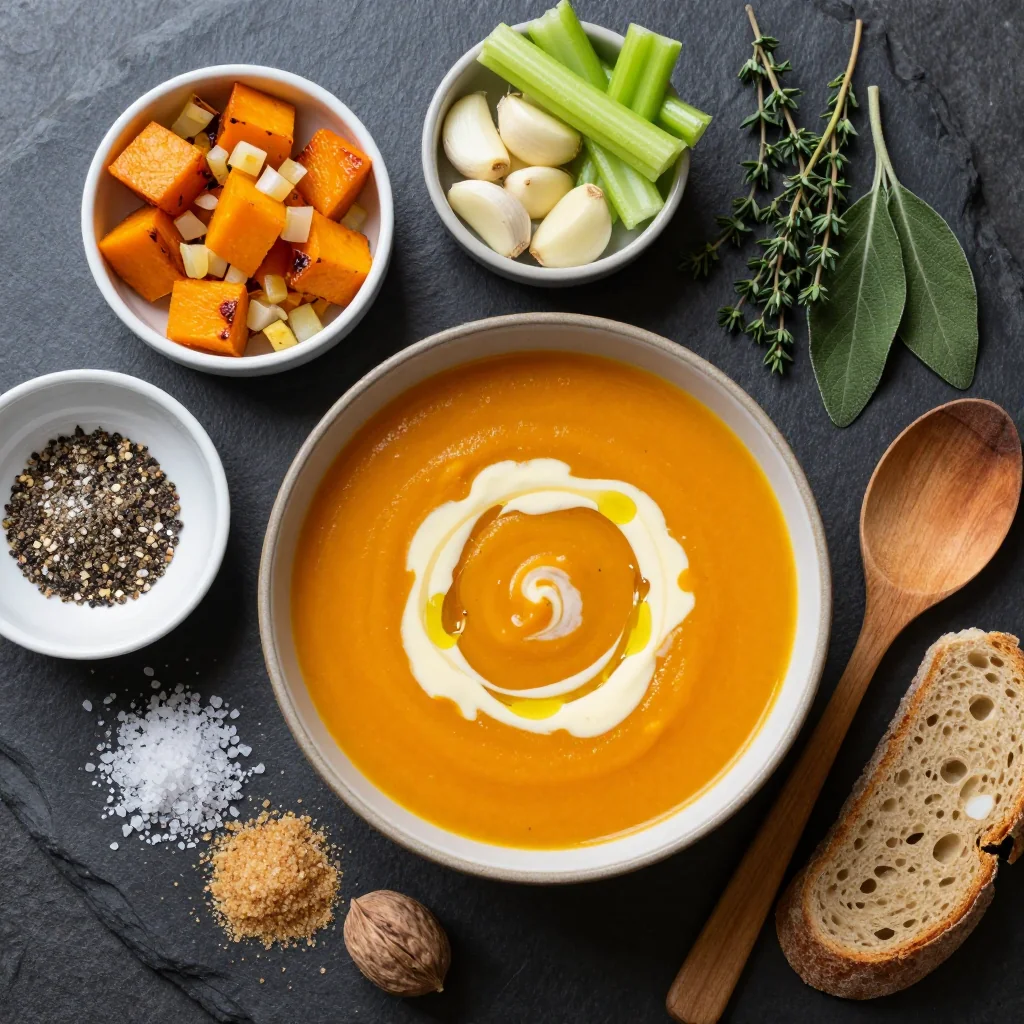
Pumpkin forms the soul of this soup, and you have options here. While canned pumpkin purée works beautifully in a pinch, I urge you to try roasting a small sugar pumpkin if time allows. The depth of flavor is remarkable—roasted pumpkin develops caramelized edges that add complexity to the final soup. When selecting fresh pumpkin, look for sugar pumpkins (also called pie pumpkins), which are smaller and sweeter than carving varieties. They should feel heavy for their size with no soft spots.
Heavy cream transforms this from a simple vegetable soup into something luxurious, but don't let that scare you health-conscious readers. We're using just enough to create richness—about 1/3 cup for the entire pot. The cream gets added at the very end, off the heat, which prevents any curdling and allows the soup to maintain its velvety texture. For a dairy-free version, coconut cream makes an excellent substitute, adding its own subtle sweetness that complements the pumpkin beautifully.
The aromatic base of onion, celery, and carrot forms the foundation of flavor. Take your time here—cooking these vegetables low and slow until they're soft and translucent is crucial. This isn't the place to rush. The onions should become jammy and sweet, which takes about 8-10 minutes over medium-low heat. Fresh garlic goes in during the last minute of cooking to prevent any bitter, burnt flavors.
For the spice blend, restraint is key. We're using cinnamon and nutmeg in tiny amounts—just enough to whisper warmth without announcing "pumpkin spice latte." Fresh ginger adds brightness and a gentle heat that cuts through the cream. A single bay leaf infuses the soup with subtle herbal notes, while a pinch of cayenne provides the faintest kick that makes you wonder why this soup tastes so much more interesting than others you've tried.
The stock you choose matters enormously. Homemade chicken stock will give you the richest flavor, but a good quality store-bought version works well. Vegetable stock keeps things vegetarian while still providing depth. Whatever you choose, warm it before adding to the pot—cold stock will shock the vegetables and slow down cooking. Finally, a squeeze of fresh lemon juice added just before serving brightens all the flavors and prevents the soup from tasting flat.
How to Make Warm Pumpkin Soup with Cream for January Lunch
Roast the Pumpkin (if using fresh)
Preheat your oven to 400°F. Cut a 2-3 pound sugar pumpkin in half, scoop out the seeds (save them for roasting later!), and rub the cut sides with olive oil. Place cut-side down on a parchment-lined baking sheet. Roast for 35-45 minutes until the flesh is very tender when pierced with a fork. The edges should be caramelized and golden. Let cool slightly, then scoop out the flesh. You should have about 2 cups of roasted pumpkin.
Build the Aromatic Base
In a heavy-bottomed Dutch oven or soup pot, melt 3 tablespoons of butter over medium heat. Add 1 diced onion, 1 diced carrot, and 1 diced celery stalk. Season with 1 teaspoon salt and ½ teaspoon pepper. Cook slowly, stirring occasionally, until vegetables are very soft and onions are translucent and beginning to turn golden—about 10-12 minutes. This slow cooking develops sweetness that will deepen your soup's flavor.
Bloom the Spices
Add 2 minced garlic cloves, 1 tablespoon grated fresh ginger, ¼ teaspoon cinnamon, ⅛ teaspoon nutmeg, and a pinch of cayenne to the pot. Cook for 1 minute, stirring constantly, until fragrant. This step, called blooming, releases the essential oils in the spices and eliminates any raw, harsh flavors. Be careful not to burn the garlic—it should just become fragrant.
Add Pumpkin and Stock
Add your roasted pumpkin (or 2 cups canned purée) to the pot, stirring to coat with the spiced aromatics. Cook for 2-3 minutes, stirring frequently. Pour in 4 cups warm chicken or vegetable stock, add 1 bay leaf, and bring to a simmer. Reduce heat to low and simmer gently for 20 minutes to meld flavors. The soup should reduce slightly and thicken.
Blend Until Silky
Remove bay leaf and blend soup until completely smooth using an immersion blender right in the pot. Alternatively, carefully transfer to a countertop blender in batches, filling no more than half full and starting on low speed. For extra-velvety texture, strain through a fine-mesh sieve back into the pot. This removes any fibrous bits that might make the soup grainy.
Enrich with Cream
Remove pot from heat and stir in ⅓ cup heavy cream, 1 tablespoon maple syrup, and 1 tablespoon lemon juice. Taste and adjust seasoning with salt and pepper. The cream should enrich but not overwhelm—the soup should still taste primarily of pumpkin. If it's too thick, thin with a bit more warm stock. For an elegant presentation, reserve some cream for swirling on top.
Serve with Style
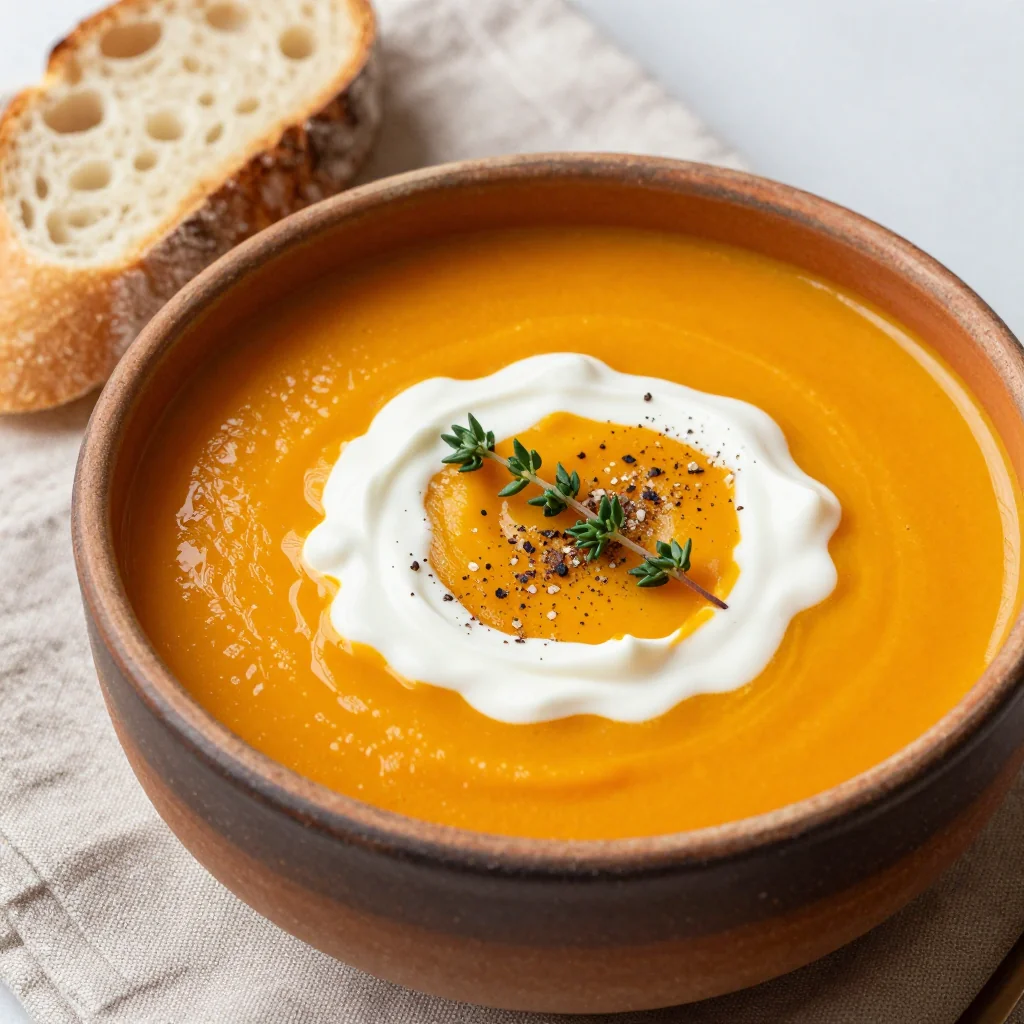
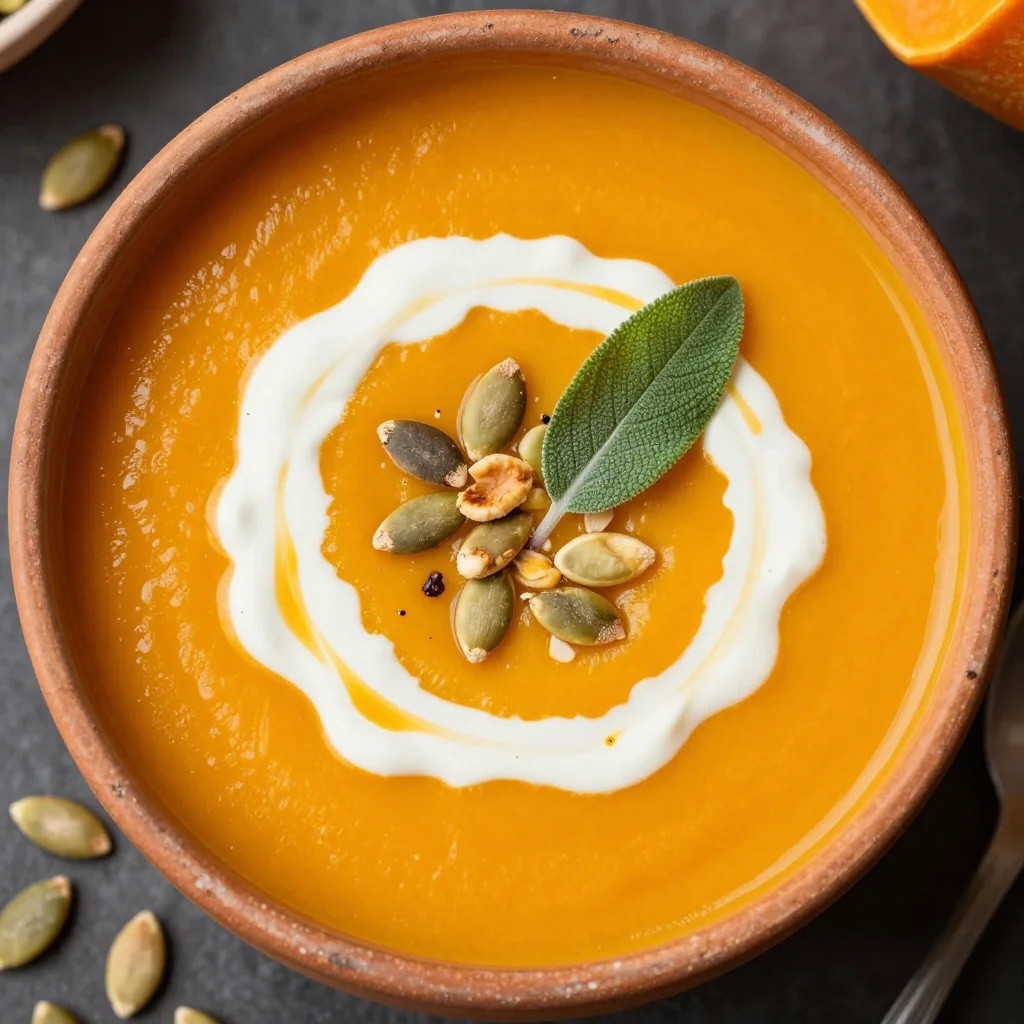
Ladle into warm bowls (warming them prevents the soup from cooling too quickly). Swirl with additional cream if desired, and garnish with toasted pumpkin seeds, a drizzle of maple syrup, or crispy pancetta. A crack of fresh black pepper and a few thyme leaves add visual appeal. Serve immediately with crusty bread for the ultimate January comfort lunch.
Store for Later
Let soup cool completely before storing in airtight containers. It keeps beautifully for up to 4 days refrigerated, and flavors actually improve overnight. For longer storage, freeze in portions for up to 3 months. When reheating, do so gently over low heat, adding a splash of stock or cream to loosen if needed. Avoid boiling, which can cause the cream to separate.
Expert Tips
Toast Your Spices
Before adding spices to the pot, toast whole cinnamon stick and nutmeg in a dry pan for 30 seconds until fragrant. Grind fresh for incomparable depth of flavor that pre-ground spices can't match.
Stock Temperature Matters
Always use warm stock when adding to the pot. Cold stock will cause the vegetables to seize up and stop cooking, leading to uneven textures and longer cooking times.
Blender Safety
When using a countertop blender, remove the center cap from the lid and cover with a kitchen towel. This prevents pressure buildup from hot soup that can cause dangerous explosions.
Temperature Control
Never let cream boil once added. High heat causes proteins to coagulate, creating an unappetizing grainy texture. Keep the soup below 180°F after adding dairy.
Pumpkin Seed Potential
Don't discard those seeds! Clean, toss with olive oil and salt, then roast at 300°F for 45 minutes, stirring every 15 minutes. They make the perfect crunchy garnish.
Make-Ahead Magic
Soup can be made through the blending step up to 3 days ahead. Add cream only when reheating to serve. This prevents any potential curdling and keeps flavors bright.
Variations to Try
Thai-Inspired Version
Replace cream with coconut milk, add 1 tablespoon red curry paste with the aromatics, finish with lime juice instead of lemon, and garnish with cilantro and chili oil.
Smoky & Spicy
Add 1 chipotle pepper in adobo sauce when blooming spices, use smoked paprika for garnish, and crumble crispy chorizo on top for a Spanish-inspired twist.
Apple & Sage
Add 1 diced apple with the aromatics, use sage instead of bay leaf, replace maple syrup with apple cider, and garnish with fried sage leaves and apple matchsticks.
Roasted Garlic
Roast a whole head of garlic alongside the pumpkin, squeeze the cloves into the soup before blending. The mellow, caramelized garlic adds incredible depth.
Storage Tips
This pumpkin soup stores beautifully, making it perfect for meal prep or entertaining. Once completely cooled, transfer to airtight containers and refrigerate for up to 4 days. The flavors actually meld and improve overnight, so making it ahead is encouraged. When reheating, do so gently over low heat, stirring frequently. If the soup has thickened too much, loosen it with a splash of stock, water, or additional cream.
For longer storage, freeze in individual portions for up to 3 months. I recommend freezing the soup before adding cream—simply prepare through the blending step, cool completely, and freeze. When ready to serve, thaw overnight in the refrigerator, reheat gently, then stir in the cream. This prevents any potential texture issues from freezing dairy.
If you've already added cream and need to freeze, the soup is still perfectly safe to eat, though the texture may become slightly grainy upon thawing. Simply reheat very gently and whisk well to reincorporate. For an even smoother texture after freezing, blend again with an immersion blender once reheated.
For packed lunches, pre-portion into thermos bottles or microwave-safe containers. The soup reheats wonderfully in the microwave—just use 50% power and stir every minute to prevent hot spots. A minute of stirring at the end helps redistribute heat evenly and restore the silky texture.
Frequently Asked Questions
Absolutely! Canned pumpkin purée works beautifully and saves significant time. Use 100% pure pumpkin, not pumpkin pie filling. For best flavor, "roast" the canned pumpkin by spreading it on a baking sheet and baking at 350°F for 20 minutes, stirring once. This concentrates flavors and removes excess moisture, mimicking the depth of fresh roasted pumpkin.
Replace butter with olive oil or coconut oil, use full-fat coconut milk instead of heavy cream, and ensure your stock is vegetable-based. The coconut milk adds its own subtle sweetness that complements pumpkin beautifully. For extra richness without dairy, blend in ½ cup soaked cashews with the soup until completely smooth.
Pumpkin needs acid and salt to shine. First, ensure you've added enough salt—soup often needs more than you think. Add more lemon juice a teaspoon at a time until flavors brighten. A touch more maple syrup can help if it's too savory. Also check that your spices are fresh; old cinnamon and nutmeg lose potency quickly.
Yes! Use sauté mode for steps 2-4, then add pumpkin and stock. Pressure cook on high for 10 minutes, quick release, then blend and finish with cream. The flavor won't be quite as developed as the stovetop version, but it's significantly faster for weeknight dinners.
Toasted pumpkin seeds add crunch, while a drizzle of maple syrup or honey brings sweetness. Crispy pancetta or bacon provides salty contrast. For elegance, try fried sage leaves, a swirl of crème fraîche, or toasted pecans. A few drops of chili oil add beautiful color and gentle heat.
Graininess usually comes from under-blending or adding cream to boiling soup. Blend until absolutely smooth, then strain through a fine-mesh sieve. Add cream off the heat and never let the soup boil after adding dairy. If already grainy, blend again with an immersion blender or countertop blender until silky.
Warm Pumpkin Soup with Cream for January Lunch
Ingredients
Instructions
- Roast pumpkin: Cut pumpkin in half, remove seeds, rub with oil, and roast at 400°F cut-side down for 35-45 minutes until tender. Scoop flesh.
- Sauté aromatics: In a large pot, melt butter over medium heat. Add onion, carrot, and celery. Cook slowly until very soft and onions are translucent, 10-12 minutes.
- Add spices: Stir in garlic, ginger, cinnamon, nutmeg, and cayenne. Cook 1 minute until fragrant.
- Simmer soup: Add pumpkin purée and warm stock. Add bay leaf and simmer 20 minutes until flavors meld.
- Blend smooth: Remove bay leaf and blend until completely smooth using an immersion blender or countertop blender.
- Finish and serve: Off heat, stir in cream, maple syrup, and lemon juice. Taste and adjust seasoning. Serve hot with desired garnishes.
Recipe Notes
For the silkiest texture, strain the blended soup through a fine-mesh sieve. Soup thickens as it sits—thin with additional stock or cream when reheating. Flavors deepen overnight, making this perfect for meal prep.