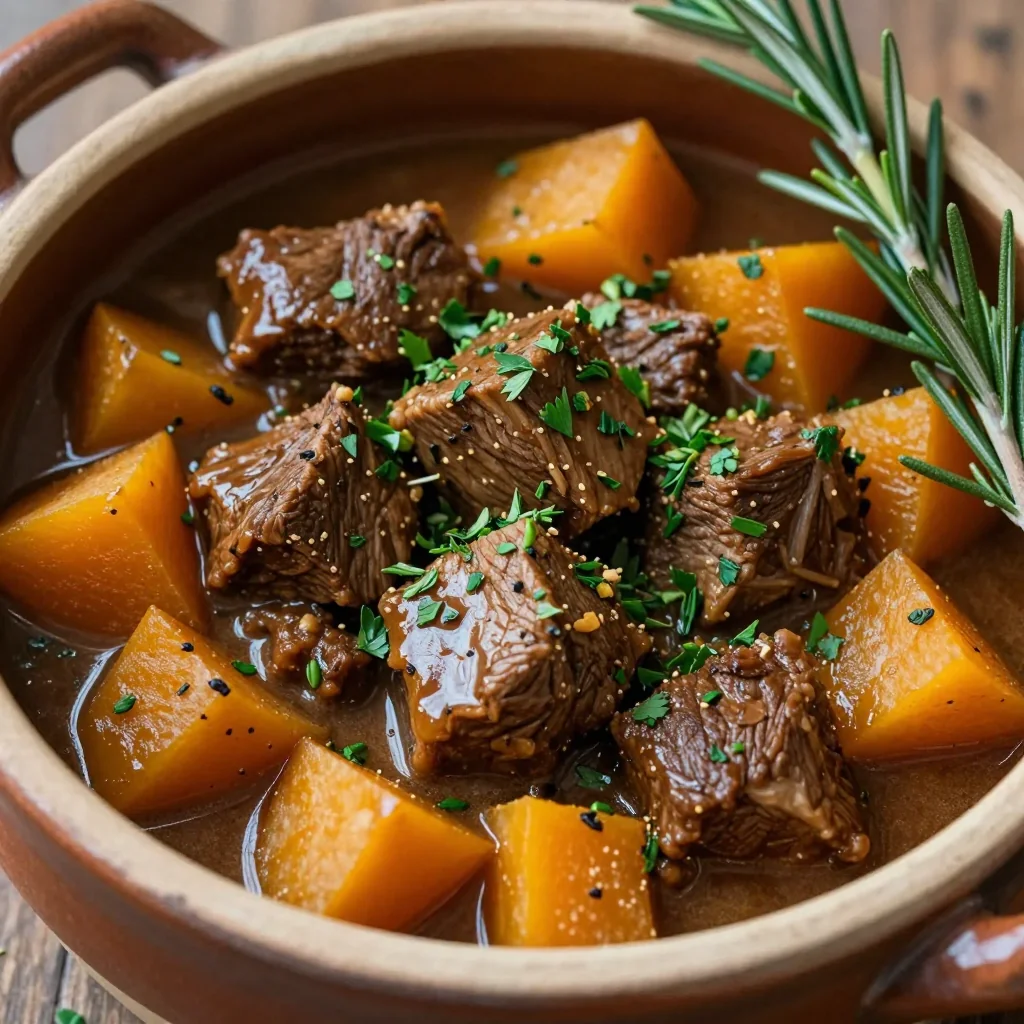
How to Make Batch-Cook Garlic-Herb Beef & Winter Squash Stew
Pat and season the beef
Trim excess hard fat but leave the silvery collagen—it melts into unctuous gravy. Cut 3½ lb (1.6 kg) chuck into 1½-inch cubes. Blot aggressively with paper towels; moisture is the enemy of browning. Toss with 2 tsp kosher salt, 1 tsp black pepper, and 1 tsp sweet paprika.
Sear in batches for deep color
Heat 2 Tbsp avocado oil in a heavy 5- to 6-quart Dutch oven until it shimmers. Working in three batches, sear beef 2 min per side until chestnut crust forms. Transfer to a rimmed plate. Crowding the pot drops the temperature and causes gray, steamed meat.
Build the aromatic base
Lower heat to medium; add 1 diced large onion and the smashed garlic cloves. Cook 4 min, scraping the fond (those browned bits equal flavor). Stir in 2 Tbsp tomato paste; cook until it turns a shade darker, about 2 min. The paste’s sugars caramelize and eliminate any metallic edge.
Deglaze with balsamic and stock
Pour in 1 Tbsp balsamic vinegar followed by 3 cups beef stock and 1 cup dry red wine (cabernet or merlot). Bring to a simmer while whisking to dissolve the browned bits. Return beef and any juices to the pot; liquid should just peek above the meat—add more stock if needed.
Add winter squash and herbs
Peel, seed, and cube 2½–3 lb winter squash into 1-inch chunks (about 6 cups). Nestle into the stew with 2 bay leaves, 2 sprigs rosemary, 3 sprigs thyme, and 1 tsp cracked fennel seeds. The squash should be mostly submerged; it will steam and soak up the broth.
Cover and braise in a gentle oven
Preheat oven to 300°F (150°C). Place a sheet of parchment directly on the stew, then cover with the lid. Bake 2 hours undisturbed. The parchment traps steam and prevents the top from drying.
Test, taste, and adjust
Remove bay and woody stems. Skim excess fat with a wide spoon or paper towel. Taste; add salt gradually—stew reduces and concentrates salinity as it cools. If you prefer a thicker gravy, mash a cup of squash against the side and stir it in.
Rest for 15 minutes before serving
Resting lets the juices redistribute and the molten temperature drop to a spoon-friendly heat. Garnish with chopped parsley leaves and a drizzle of grassy olive oil for sheen.
Expert Tips
Temperature matters
Let refrigerated beef sit at room temp 30 min before searing; cold meat shocks the pot and lowers oil temperature, leading to gray stew meat.
Deglaze thoroughly
Use a flat wooden spatula to coax every fond bit loose; those caramelized sugars dissolve into the broth and supply restaurant-level depth.
Overnight flavor boost
Make the stew a day ahead; refrigeration allows fat to solidify on top for easy removal and lets flavors meld into a richer profile.
Portion before freezing
Ladle cooled stew into silicone muffin trays; freeze, then pop out pucks and store in zip bags for single-serve meals that thaw quickly.
Slow-cooker conversion
After searing, transfer everything to a 6-quart slow cooker; cook on LOW 7–8 hours or HIGH 4 hours. Stir in ½ cup cream for a silky finish.
Color pop garnish
Top each bowl with a spoonful of pomegranate arils; the ruby seeds burst with acid that cuts richness and add cheerful midwinter color.
Variations to Try
- Paleo & Whole30: Replace wine with equal parts stock and 1 Tbsp apple-cider vinegar; serve over cauliflower mash.
- Smoky Southwest: Swap rosemary for 1 chipotle in adobo, add 1 tsp cumin, and stir in a handful of frozen corn during the last 10 min.
- Mushroom lover: Sauté 8 oz cremini mushrooms after browning meat; they soak up garlicky fat and give an umami layer.
- Green veggie boost: Fold in 4 cups baby spinach during reheating; it wilts instantly and adds folate without extra cooking time.
- Lamb option: Use lamb shoulder; add ½ tsp ground coriander and finish with fresh mint instead of parsley for a Mediterranean vibe.
- Vegan adaptation: Substitute beef with 3 cans chickpeas and use vegetable stock; add 2 Tbsp white miso for depth and body.
Storage Tips
Refrigerating: Cool stew completely, then transfer to airtight glass containers. It keeps up to 4 days; flavors deepen each day. Reheat gently over medium-low, adding splash of stock or water to loosen.
Freezing: Portion into quart-size freezer bags, press out excess air, and freeze flat for space-efficient stacking. Use within 3 months for best texture. Thaw overnight in the fridge or submerge sealed bag in cold water for quicker defrosting.
Make-ahead lunches: Fill single-serve mason jars three-quarters full; freeze without lids. Once solid, screw on lids to prevent freezer burn. Grab one on your way out the door; it’ll thaw by lunchtime and can be microwaved directly in the jar (remove metal ring first).
Frequently Asked Questions
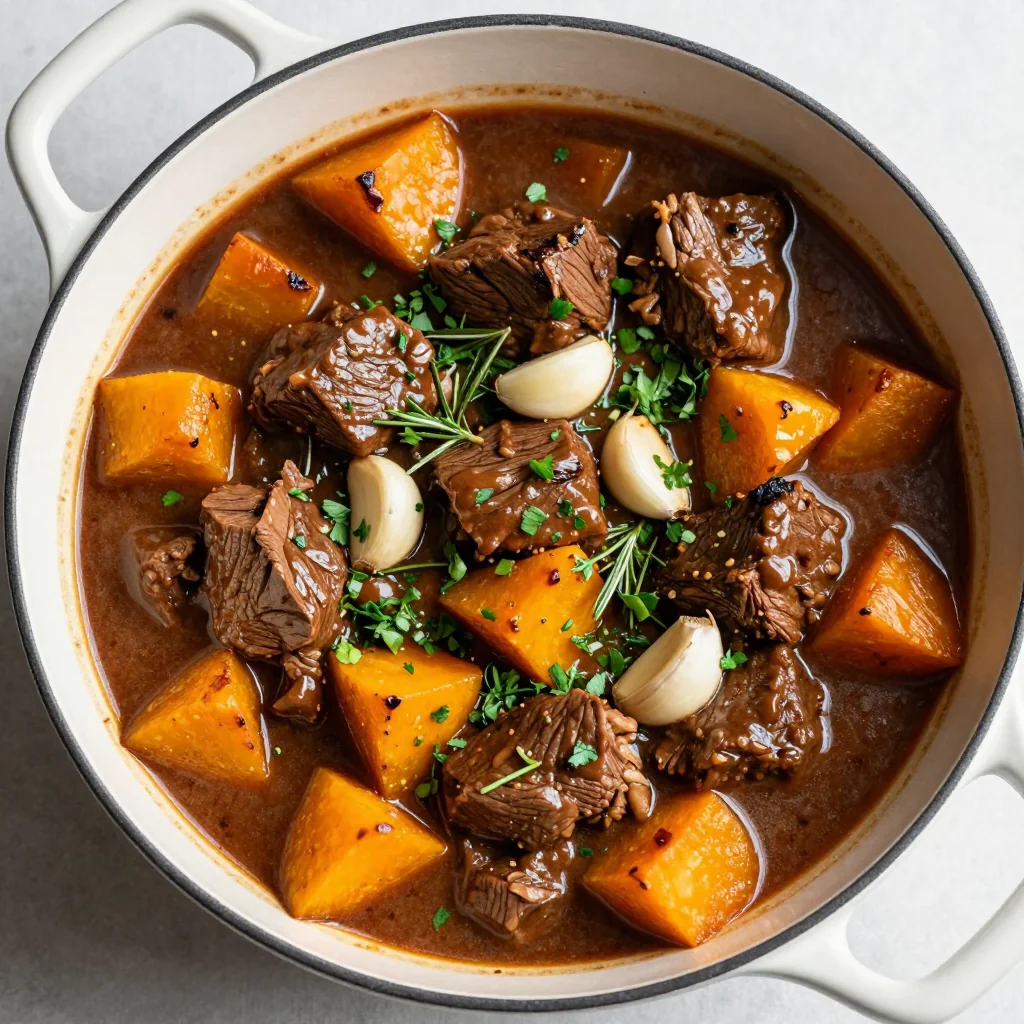
batch cook garlic herb beef and winter squash stew for january
Ingredients
Instructions
- Season & sear: Pat beef dry; toss with salt, pepper, and paprika. Heat oil in Dutch oven over medium-high. Brown beef in three batches, 2 min per side. Transfer to plate.
- Aromatics: Lower heat to medium. Add onion and garlic; cook 4 min. Stir in tomato paste; cook 2 min.
- Deglaze: Add balsamic, stock, and wine; bring to simmer while scraping browned bits. Return beef and juices.
- Add squash & herbs: Stir in squash, bay, rosemary, thyme, and fennel. Liquid should barely cover meat.
- Braise: Cover with parchment then lid. Bake at 300°F (150°C) 2 hours or until beef shreds easily.
- Finish: Discard bay and stems. Skim fat. Season to taste. Garnish with parsley and serve hot.
Recipe Notes
Stew thickens as it cools; add stock when reheating. Flavor peaks on day 2—perfect for meal prep. Freeze up to 3 months.