Picture this: I walk into the kitchen, a half‑baked rotisserie chicken still warm in its plastic wrap, and a craving that feels like a dare. I’ve been chasing that smoky, savory bite of a Korean barbecue all week, but my fridge is a mystery box of leftovers and pantry staples. I pull the chicken out, toss a splash of soy, and it smells like a promise. The kitchen is loud—sizzle, chatter, the clatter of pots—and the air is thick with anticipation. I’m not just cooking; I’m rewriting a story that started with a forgotten meal.
I’ve always believed that the best recipes are born from the messes that happen when you’re halfway through a dish. That night, the rotisserie chicken was the star, but it needed a new stage. I decided to turn it into a Korean BBQ delight, and the result was a dish that feels both indulgent and surprisingly low‑calorie. The combination of half‑calorie rice, tangy cucumber kimchi, and a creamy kimchi sauce creates layers of flavor that dance on the palate. The chicken, already tender, absorbs the sauce like a sponge, turning each bite into a burst of umami and subtle heat.
If you’ve ever wrestled with a chicken that’s too dry or a sauce that’s too sweet, this recipe is your salvation. I dare you to taste this and not go back for seconds. The texture is a delightful contrast: the crispy edges of the chicken crackle like thin ice, while the inner meat stays moist and juicy. The sauce coats the chicken like velvet, and the pickled carrots add a bright, crunchy counterpoint. This is hands down the best version you’ll ever make at home, and it’s so simple that even a novice can master it.
Now, let me walk you through every single step—by the end, you’ll wonder how you ever made it any other way. From the first stir to the final garnish, each moment is designed to elevate the humble leftover into a show‑stopping dish. So grab a pen, a notepad, and let’s get cooking. Trust me, the kitchen will smell incredible, and your friends will be begging for the recipe.
What Makes This Version Stand Out
- Flavor Fusion: The marriage of Korean BBQ sauce and creamy kimchi sauce creates a depth of taste that feels like a passport to Seoul, yet it’s anchored in familiar comfort foods.
- Texture Contrast: Crispy chicken edges, chewy rice, and crunchy pickled carrots give each bite a satisfying play of textures.
- Low‑Calorie Appeal: Half‑calorie rice and lean chicken keep the dish light without sacrificing flavor, making it a guilt‑free crowd‑pleaser.
- Make‑Ahead Friendly: The sauce can be pre‑mixed, and the chicken can be reheated with a splash of water, so you’re ready to serve in minutes.
- Ingredient Accessibility: Every component can be found in any grocery store, and no exotic items are required.
- Visual Impact: The glossy glaze, bright green scallions, and toasted sesame seeds turn an ordinary plate into a gallery piece.
- Versatile Serving Options: Serve it over rice, in a lettuce wrap, or as a topping for noodles—your imagination is the limit.
- Social Proof: Friends who have tried this rave about the “wow” factor and the ease of preparation.
Alright, let's break down exactly what goes into this masterpiece…
Inside the Ingredient List
The Flavor Base
The Korean BBQ sauce is the heart of this dish. It brings sweetness, umami, and a subtle kick that lingers on the tongue. Don’t skimp on it; a generous splash transforms the chicken from ordinary to unforgettable. If you can’t find a pre‑made sauce, blend soy sauce, brown sugar, garlic, and a pinch of gochujang for a homemade version that works just as well.
The Texture Crew
Half‑calorie rice provides a neutral canvas that absorbs the sauce without adding heaviness. Cook it according to the package instructions, then fluff with a fork to keep it airy. The pickled carrots add a bright crunch that cuts through the richness of the sauce. If you’re watching sodium, look for low‑sodium options or make your own pickled carrots with vinegar and a touch of sugar.
The Unexpected Star
Creamy kimchi sauce is the secret weapon that elevates this dish from good to legendary. It’s silky, tangy, and slightly spicy, and it balances the sweetness of the BBQ sauce. A few spoonfuls of this sauce will coat the chicken in a glossy, flavorful glaze that feels like a culinary revelation. If you can’t find it, mash kimchi with a splash of coconut milk for a similar effect.
The Final Flourish
Toasted sesame seeds and scallions add a nutty aroma and a pop of color. The sesame seeds should be toasted until golden and fragrant, then sprinkled over the finished dish. Scallions give a fresh, oniony note that brightens the entire plate. Together, they create a visual and sensory crescendo that makes the dish feel restaurant‑quality.
Everything's prepped? Good. Let's get into the real action…
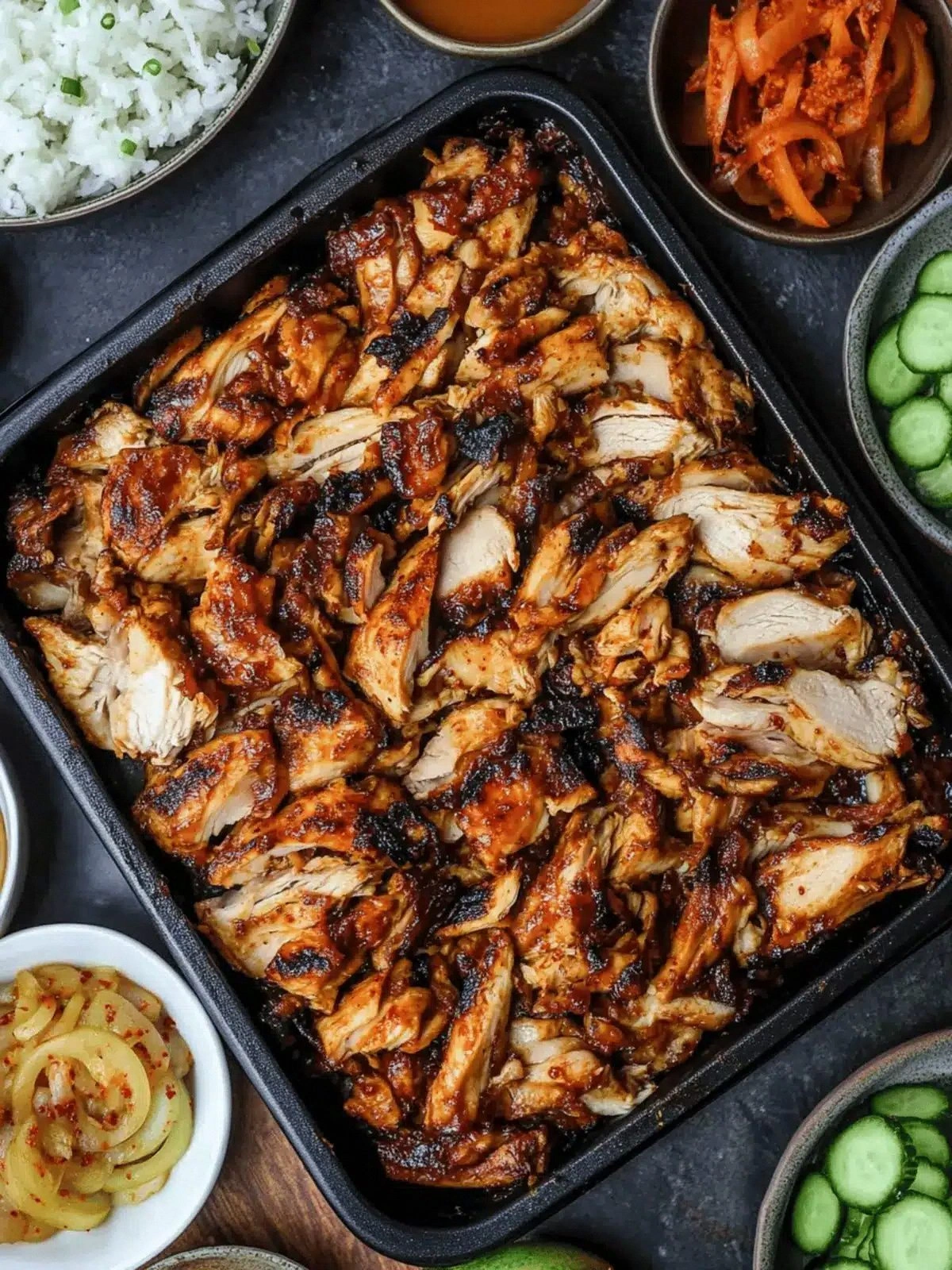
The Method — Step by Step
- Start by pulling the rotisserie chicken out of its plastic wrap and placing it on a cutting board. Let it rest for a minute so the juices redistribute. This simple pause keeps the meat moist. While the chicken rests, preheat a large skillet over medium heat. A hot pan ensures a quick sear that locks in flavor.
- Shred the chicken into bite‑sized pieces with your hands or two forks. The shredded texture makes it easier to coat with sauce and speeds up cooking. If you prefer larger chunks, that’s fine—just make sure they’re uniform for even cooking. The goal is a consistent bite every time.
- Add a splash of vegetable oil to the skillet and let it shimmer. Toss in the shredded chicken, spreading it in a single layer. Sauté for 2-3 minutes, allowing the edges to brown slightly. The sizzling sound is the kitchen’s way of saying you’re on the right track.
- Pour in the Korean BBQ sauce, then stir to coat all the chicken pieces. The sauce should coat the chicken like a glossy coat of paint. As it heats, the sugars caramelize, creating a subtle caramelization that adds depth. Keep the heat medium to avoid burning the sugars.
- Add the creamy kimchi sauce and stir until the mixture is smooth and the chicken is fully coated. The sauce should thicken slightly, forming a silky glaze. The aroma at this point is irresistible—think smoky, sweet, and a hint of fermented tang.
- Reduce the heat to low and let the mixture simmer for 5 minutes, stirring occasionally. The chicken will absorb the sauce, becoming tender and flavorful. Watch the edges; they should start pulling away from the pan, indicating a caramelized finish.
- Meanwhile, cook the half‑calorie rice according to package instructions. Once ready, fluff it with a fork and set aside. The rice will serve as the perfect base for the saucy chicken.
- Plate the rice, top with the glazed chicken, and scatter cucumber kimchi, pickled carrots, toasted sesame seeds, and sliced scallions on top. The contrast of colors—rich red, bright green, and golden sesame—makes the dish visually stunning. Serve immediately while everything is still warm.
That's it — you did it. But hold on, I've got a few more tricks that'll take this to another level…
Insider Tricks for Flawless Results
The Temperature Rule Nobody Follows
Many cooks think high heat is always better, but when it comes to Korean BBQ sauce, medium heat is key. The sugars in the sauce need time to caramelize without scorching. If you’re using a cast‑iron skillet, preheat it for a few minutes before adding oil. This ensures a consistent sear and prevents sticking.
Why Your Nose Knows Best
Trust your sense of smell. When the sauce starts to bubble and the aroma turns caramelized, it’s a sign the flavor is developing. The scent of toasted sesame and fermented kimchi should mingle, creating an enticing bouquet that signals the dish is ready.
The 5-Minute Rest That Changes Everything
After removing the chicken from the pan, let it rest for 5 minutes. This allows the juices to redistribute, ensuring each bite stays moist. The rest also lets the sauce thicken slightly, giving the glaze a luscious consistency. It’s a small pause that pays off big time.
Layering Flavors with a Final Splash
Right before serving, drizzle a tiny splash of sesame oil over the finished dish. The oil adds a nutty aroma and a glossy sheen that elevates the visual appeal. It’s a finishing touch that makes the dish feel polished and restaurant‑ready.
Keeping It Fresh on the Plate
If you’re preparing this ahead of time, store the chicken and sauce separately from the rice. Assemble just before serving to keep the rice from becoming soggy. This keeps each component crisp and flavorful.
Creative Twists and Variations
This recipe is a playground. Here are some of my favorite ways to switch things up:
Spicy Kimchi Jambalaya
Replace the half‑calorie rice with jasmine rice and stir in a handful of diced tomatoes. Add a splash of hot sauce for an extra kick. This variation brings a Southern flair to the Korean base.
Asian Noodle Bowl
Swap the rice for cooked soba noodles. Toss the noodles with a little sesame oil before adding the chicken and sauce. The chewy noodles pair beautifully with the glossy glaze.
Vegan Version
Use a plant‑based rotisserie “chicken” or shredded tofu. Keep the sauces the same. The result is a vegan dish that still delivers that smoky, umami punch.
Breakfast Kick‑Start
Serve the chicken and sauce over a bowl of quinoa or oats. Top with a fried egg for a hearty breakfast that feels like a brunch special.
Low‑Sodium Make‑over
Use a low‑sodium Korean BBQ sauce and reduce the amount of added soy. The dish remains flavorful, and the sodium content drops dramatically.
Sweet & Smoky Dessert
For a playful twist, drizzle a thin layer of honey over the finished dish and sprinkle toasted coconut. The sweetness balances the savory, creating a dessert‑like experience.
Storing and Bringing It Back to Life
Fridge Storage
Store the cooked chicken and sauce in an airtight container for up to 3 days. Keep the rice separate until you’re ready to serve. This prevents the rice from becoming soggy and preserves the sauce’s texture.
Freezer Friendly
Freeze the chicken and sauce together in a freezer‑safe bag for up to 2 months. When reheating, add a splash of water to keep the sauce from drying out. The dish will retain its flavor and moisture after thawing.
Best Reheating Method
Reheat in a skillet over medium heat, stirring until warmed through. The heat should be gentle to avoid burning the sauce. If the sauce has thickened, add a teaspoon of water to loosen it. Serve immediately for the best taste.